Everest 3 Pass Trek

Trip Description

TheCounterclockwise Everest 3 Pass Trek is the ultimate high-altitude trekking challenge in the Everest Region, crossing three dramatic mountain passes - Renjo La (5,360 m), Cho La (5,420 m), and Kongma La (5,535 m) - while also visiting Everest Base Camp and summiting Kala Patthar. This trek is designed for experienced and ambitious trekkers who want to experience the full depth and scale of the Khumbu.

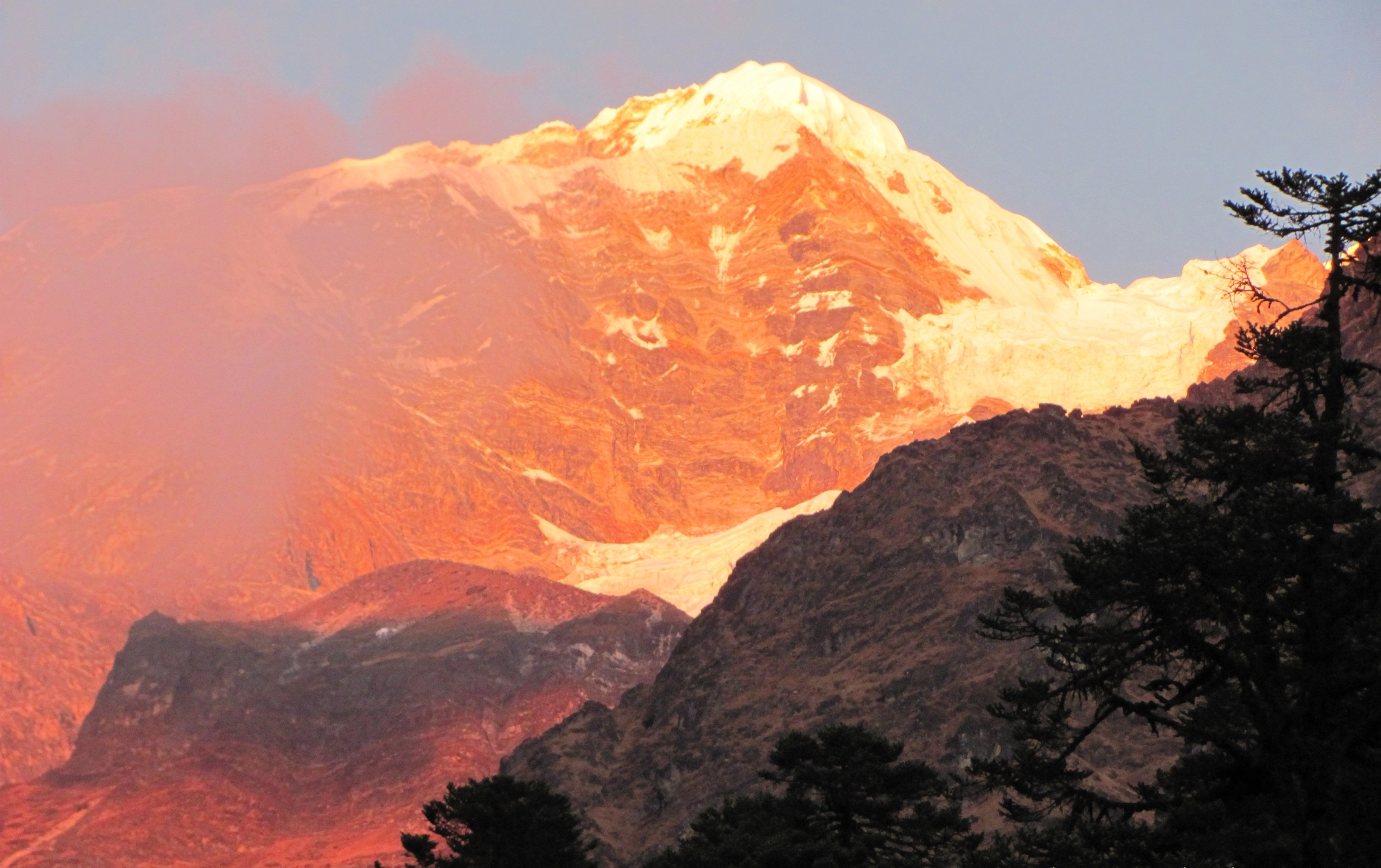
The journey begins with a mountain flight to Lukla and climbs through the familiar landmarks of the Everest trail - Namche Bazaar, Tengboche, and the upper Khumbu - before venturing into the remote and rarely visited valleys that connect the three passes. Each crossing is a serious undertaking, rewarding you with vast panoramic views of Everest, Lhotse, Makalu, Cho Oyu, and the surrounding giants of the Himalayas.

Unlike the standard Base Camp route, the Three Pass Trek takes you away from the main trail and into the quieter, wilder corners of the Khumbu. The sense of remoteness, combined with the scale of the scenery and the physical demands of the route, makes this one of the most complete and satisfying trekking experiences available anywhere in Nepal.

With Virgin Nepal Trek & Expedition, you are supported by an experienced team throughout every high pass crossing and remote section of this demanding and deeply rewarding journey.

Culture of the Everest Region

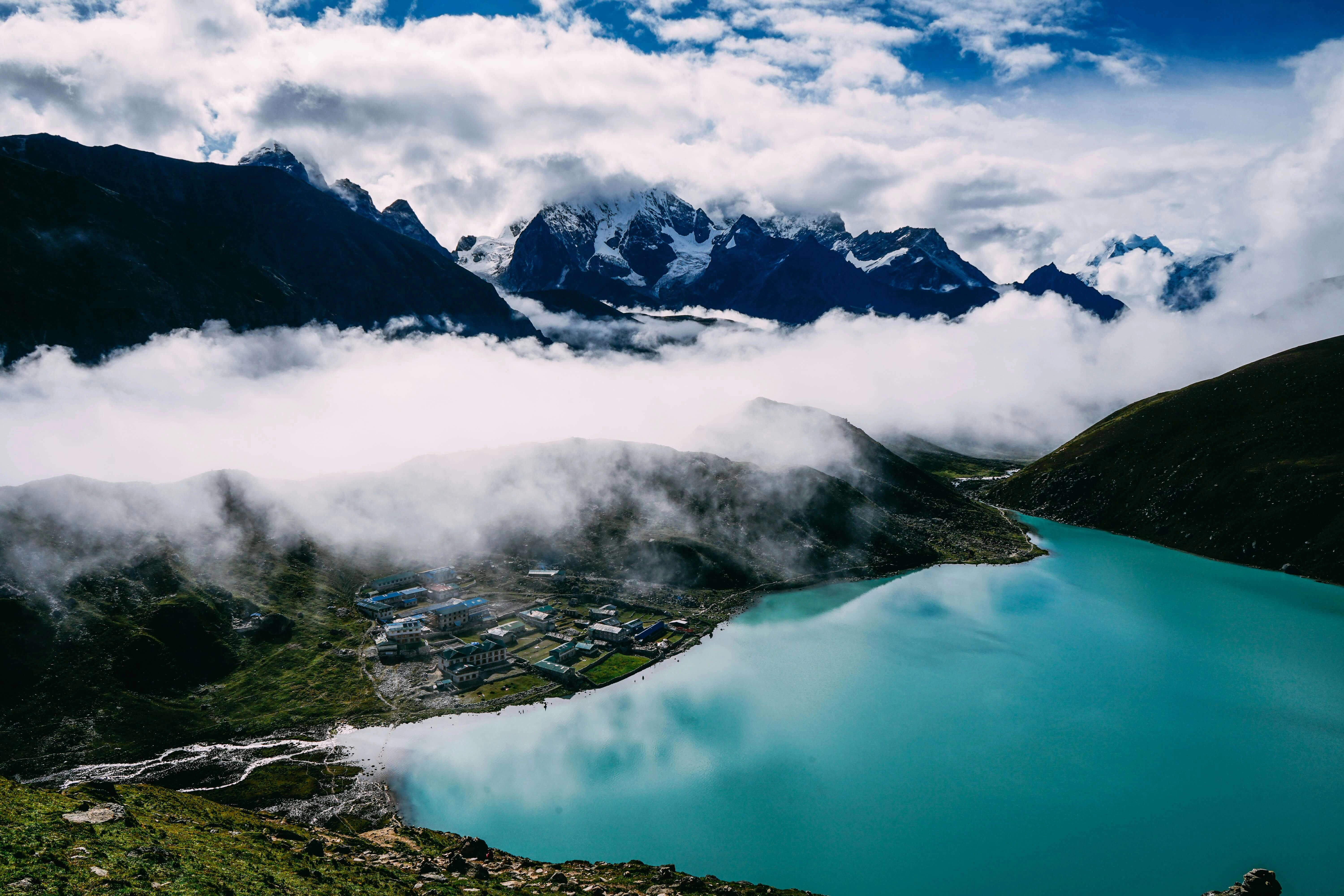
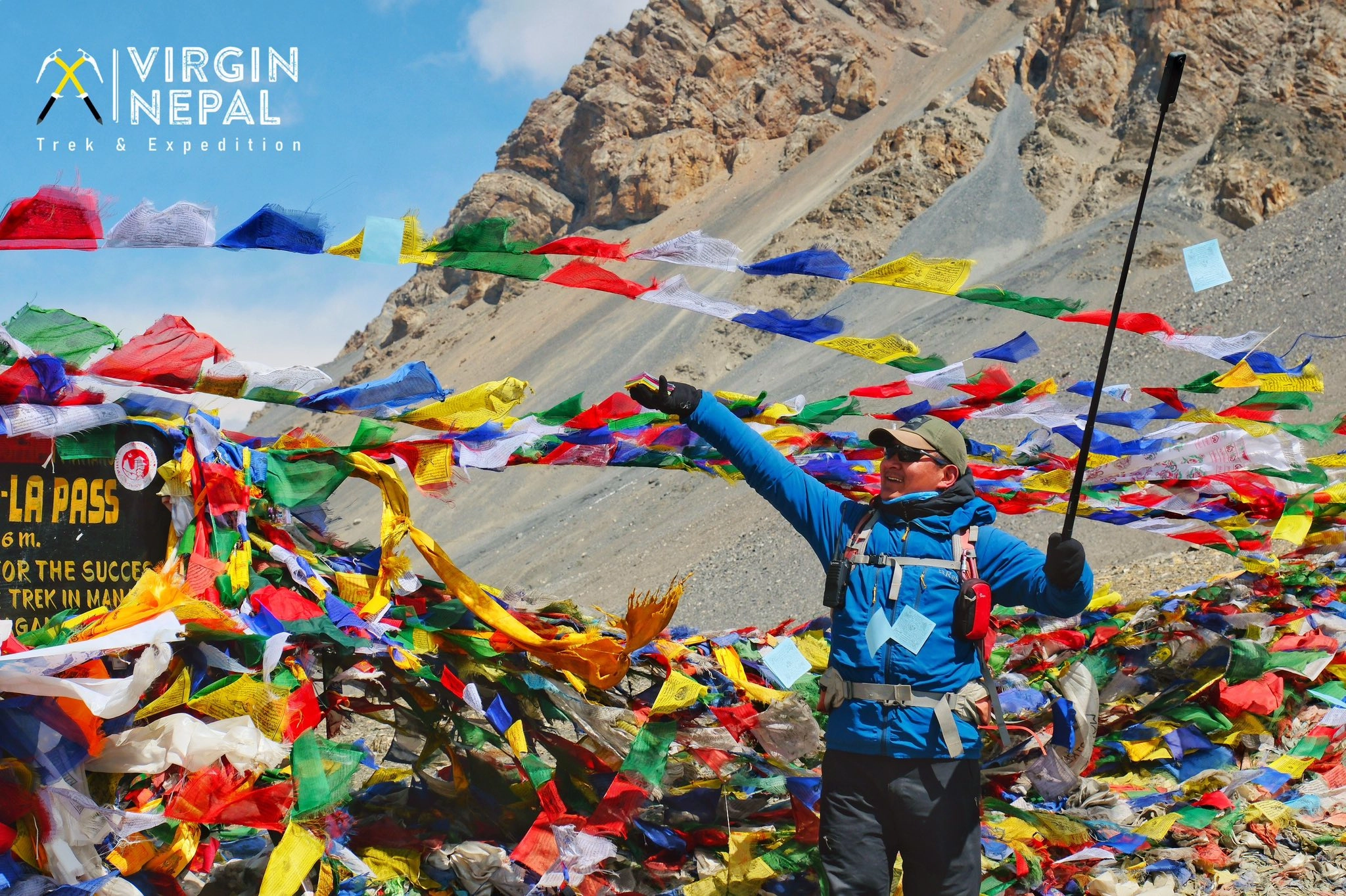
The Three Pass Trek winds through the heart of Sherpa country, passing monasteries, mani walls, and ancient trade routes that once connected Nepal and Tibet. Villages like Thame, Gokyo, and Chhukung offer an intimate look at Sherpa life away from the busier sections of the main Everest trail. The spiritual atmosphere of the high Khumbu - where prayer flags snap in the wind above glacial lakes and towering peaks - adds a profound and lasting dimension to this extraordinary journey.

Best Season

Spring (March to May)

Stable weather, clear skies, and moderate temperatures across all three passes make spring the ideal season for this demanding trek.

Autumn (September to November)

Excellent visibility and crisp, settled conditions offer outstanding mountain views and reliable trekking weather throughout the entire route.

Contact our team to plan yourCounterclockwise Everest 3 Trek with the right timing and full support for your adventure.
highlights

Cross three spectacular high passes: Renjo La (5,360 m), Cho La (5,420 m), and Kongma La (5,535 m).
Reach Everest Base Camp and summit Kala Patthar for unforgettable mountain views.
Explore remote and less-traveled valleys across the Khumbu region.
Experience authentic Sherpa culture, ancient monasteries, and traditional villages.
Witness panoramic views of Everest, Lhotse, Makalu, Cho Oyu, and other Himalayan giants.
Trek through dramatic glaciers, high-altitude landscapes, and pristine mountain valleys.
Challenge yourself on one of Nepal’s most demanding and rewarding trekking routes.
Best seasons: Spring (March–May) and Autumn (September–November).

Day by day Itinerary

Upon arrival at Tribhuvan International Airport,  a representative from Virgin Nepal Trek & Expedition will warmly welcome you and transfer you to your hotel in Kathmandu. After check-in, you may rest or explore the lively streets of Thamel. In the evening, you will meet your trekking guide for a trip briefing and a welcome dinner featuring traditional Nepalese cuisine. Overnight stay in Kathmandu.


Max Altitude

1,300 m / 4,264 ft

Accommodation

Hotel in Kathmandu

Meals

Dinner

After breakfast, your trekking guide will conduct a full equipment inspection to ensure all necessary gear is in order. Any missing items can be purchased in Kathmandu before departure. If time permits, the day is also an excellent opportunity to visit some of Kathmandu's UNESCO World Heritage Sites, including Boudhanath, Swayambhunath, or Pashupatinath. Overnight stay in Kathmandu.

Max Altitude

1,300 m / 4,264 ft

Accommodation

Tea House /Lodge

Meals

Breakfast

Flight Duration: Approximately 40 minutes

Trek Duration: Approximately 3-4 hours

An early morning scenic mountain flight from Kathmandu takes you to Lukla, one of the world's most thrilling mountain airports. After the guide organizes the equipment and porter loads, the trek begins through traditional Sherpa villages and forested trails alongside the Dudh Koshi River, crossing several suspension bridges before arriving at the welcoming Sherpa settlement of Phakding. Overnight stay in Phakding.


Max Altitude

2,652 m / 8,700 ft

Accommodation

Tea House /Lodge

Meals

Breakfast, Lunch, Dinner

Trek Duration: Approximately 6-7 hours

The trail follows the banks of the Dudh Koshi River, crossing it twice via suspension bridges before reaching Monjo, the entrance to Sagarmatha National Park. After registering at the park checkpoint, the route descends to Jorsalle and then climbs steadily alongside the river to the famous Hillary Suspension Bridge. A steep final ascent leads to Namche Bazaar, the vibrant trading capital of the Khumbu region, set in a dramatic natural amphitheater surrounded by Himalayan peaks. Overnight stay in Namche Bazaar.


Max Altitude

3,440 m / 11,283 ft

Accommodation

Tea house/Lodge.

Meals

Breakfast, Lunch, Dinner

A full acclimatization day in Namche Bazaar is essential before ascending further. You may hike to the Everest View Hotel for breathtaking panoramic views, visit the Sherpa Museum to explore the history of mountaineering and Sherpa culture, take a short hike toward Thame village, or simply browse the lively local market. If your visit falls on a Saturday, the weekly market is a particularly vibrant and colorful experience. Overnight stay in Namche Bazaar.


Max Altitude

3,440 m / 11,283 ft

Accommodation

Hotel/Lodge

Meals

Breakfast, Lunch, Dinner

Trek Duration: Approximately 5-6 hours

Leaving Namche Bazaar, the trail offers magnificent views of Everest, Nuptse, Lhotse, Ama Dablam, and Thamserku throughout the day. The route descends to Kayangjuma and continues through pine forests to Sansa, a major trail junction for Gokyo Valley and Everest Base Camp. After a relaxed lunch stop at the small teahouse settlement of Phunki Thenga, a steady climb through pine forests leads to Tengboche, home to the largest Buddhist monastery in the Khumbu region and set against a spectacular backdrop of Ama Dablam, Nuptse, and Everest. Overnight stay in Tengboche.


Max Altitude

3,870 m / 12,694 ft

Accommodation

Hotel/Lodge

Meals

Breakfast, Lunch, Dinner

Trek Duration: Approximately 5-6 hours

The morning begins with stunning photographs of Tengboche Monastery bathed in early light before the trail departs via the upper route toward Pangboche village, passing chortens and mani walls. After lunch with close-up views of Ama Dablam, the route continues northeast into the Imja Valley beneath the towering north face of Ama Dablam. The final ascent of the day climbs to Dingboche, a picturesque village surrounded by stone-walled fields growing barley, buckwheat, and potatoes. Overnight stay in Dingboche.


Max Altitude

4,360 m / 14,300 ft

Accommodation

Guesthouse/Lodge

Meals

Breakfast, Lunch, Dinner

Trek Duration: Approximately 3 hours

Today's short stage follows a scenic route from Dingboche into the Chhukung Valley, offering captivating views of Island Peak, Ama Dablam, and the surrounding glacial terrain. Chhukung is a small but well-equipped settlement at the foot of the Chhukung Glacier, making it an ideal base for the Kongma La crossing the following day. Overnight stay in Chhukung.

Max Altitude

4,730 m / 15,518 ft

Accommodation

Guesthouse/Lodge

Meals

Breakfast, Lunch, Dinner

Trek Duration: Approximately 7-8 hours

Today's crossing of Kongma La Pass at 5,535 meters is the highest of the three passes and one of the most demanding days of the entire trek. Departing early, the route ascends steeply through rocky terrain and traverses the Khumbu Glacier before reaching the pass summit, where sweeping views of Makalu, Lhotse, Nuptse, and the surrounding Khumbu giants are the reward. The descent on the far side leads to the lateral moraine of the Khumbu Glacier and the settlement of Lobuche. There are no shops or teahouses along the pass route, so adequate food, water, and warm layers must be carried. Overnight stay in Lobuche.


Max Altitude

4,940 m / 16,210 ft

Accommodation

Tea House Lodge

Meals

All Meals [Breakfast, Lunch, Dinner]

A rest and acclimatization day at Lobuche allows your body to recover from the Kongma La crossing and prepare for the days ahead. You may take a short acclimatization hike on the surrounding moraines to further adjust to the altitude, or simply rest and enjoy the dramatic mountain scenery. Overnight stay in Lobuche.

Max Altitude

4,940 m / 16,207 ft

Accommodation

Hotel/Lodge

Meals

Breakfast, Lunch, Dinner

Trek Duration: Approximately 8-9 hours

The trail from Lobuche follows the lateral moraine of the Khumbu Glacier toward Gorak Shep, with views of Pumori, Nuptse, Lingtren, and Khumbutse along the way. After lunch at Gorak Shep, the trek continues to Everest Base Camp beside the dramatic Khumbu Glacier, where colorful expedition tents and the towering Khumbu Icefall create an unforgettable atmosphere. After celebrating this achievement, the team returns to Gorak Shep for the night. Overnight stay in Gorak Shep.

Max Altitude

5,164 m – 5,170 m / 16,942 ft – 16,961 ft

Accommodation

Hotel/Lodge

Meals

Breakfast, Lunch, Dinner

Trek Duration: Approximately 7-8 hours

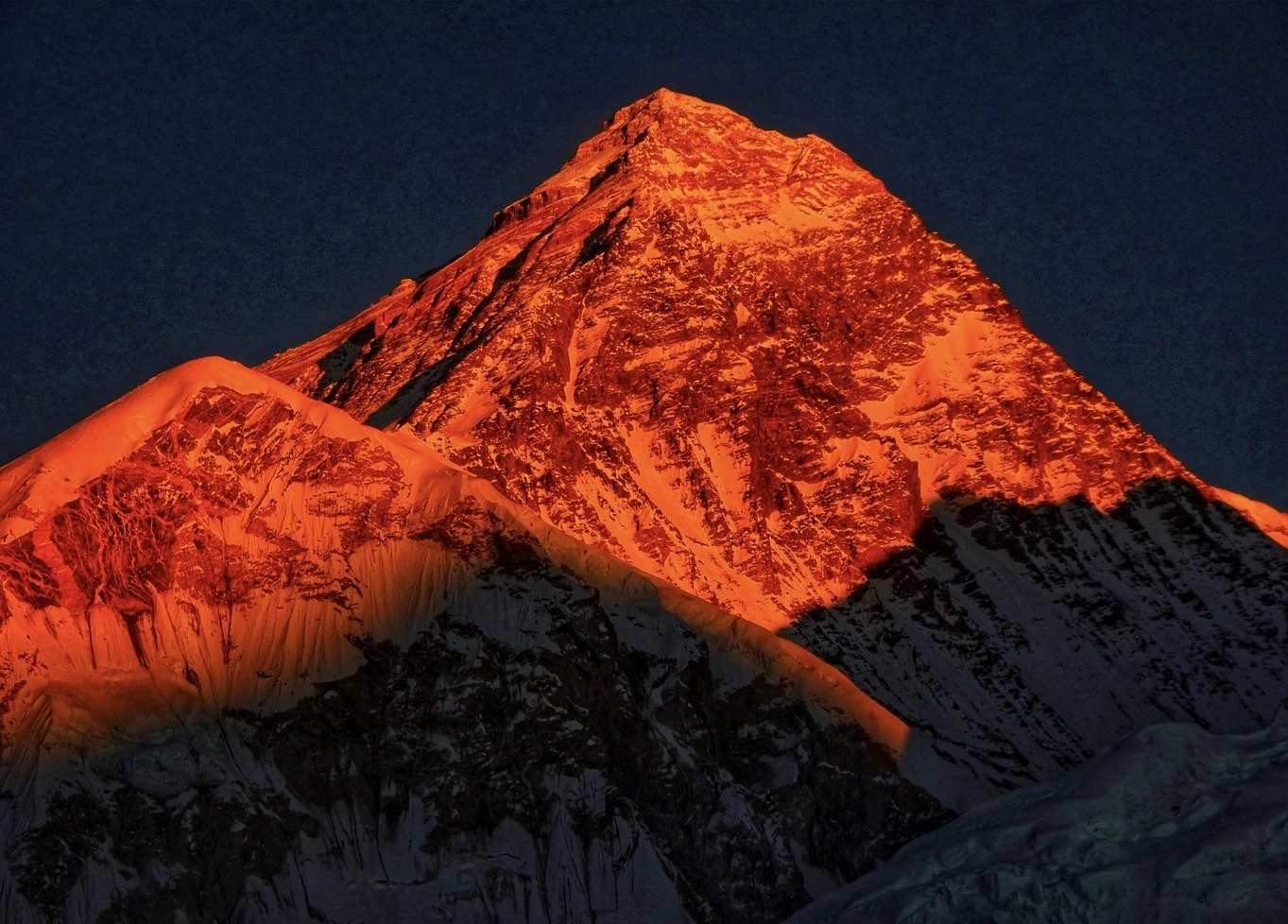
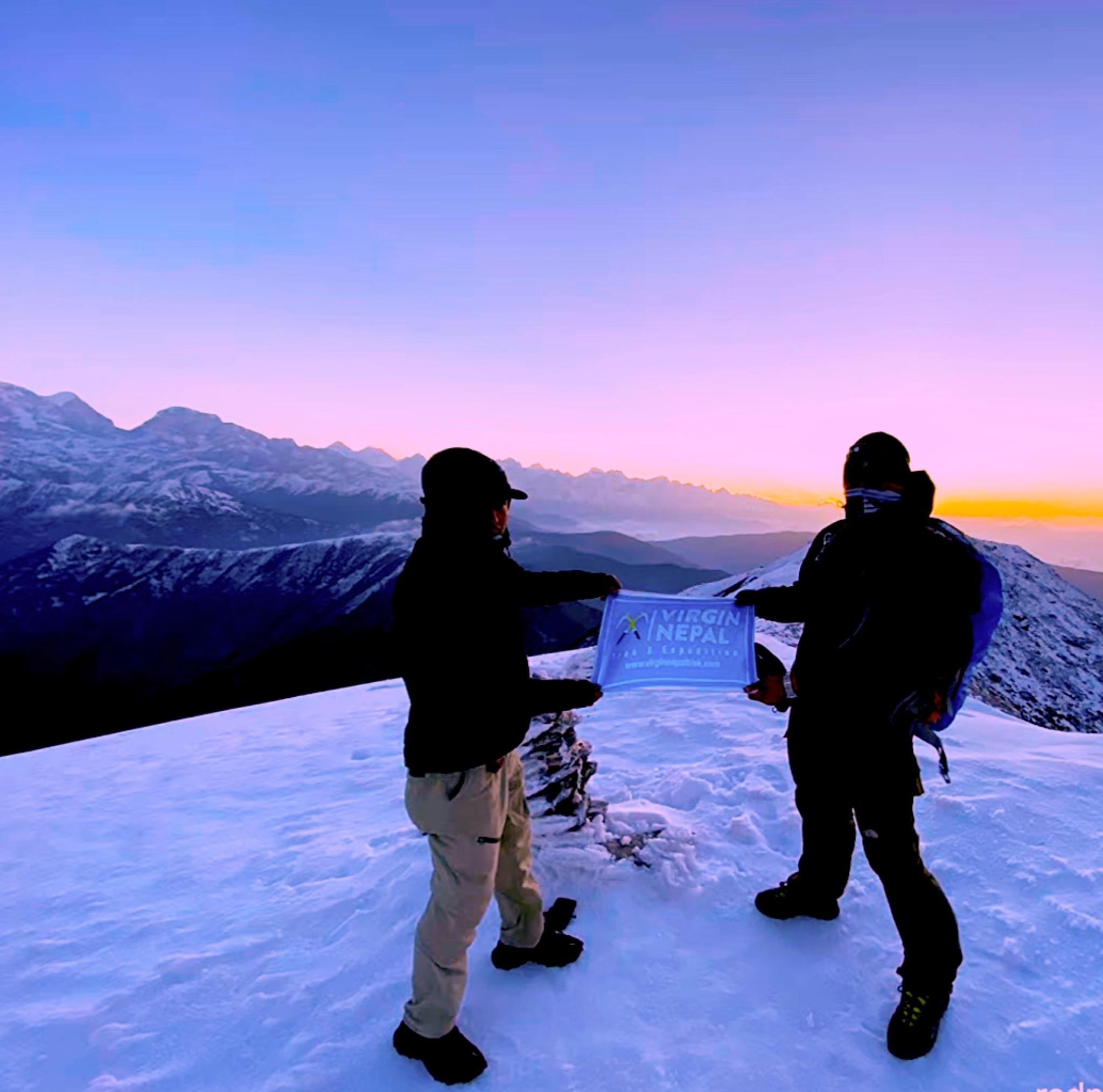
An early pre-dawn start is required to reach Kala Patthar before sunrise. Temperatures at this hour typically range from -10 to -14 degrees Celsius, so warm layers are essential. The ascent passes several excellent viewpoints before reaching the summit marked by cairns and prayer flags, where a sweeping panoramic view of Everest, Lhotse, Nuptse, Pumori, Lingtren, Khumbutse, and Changtse unfolds in full. After spending time at the summit, the team descends to Gorak Shep for breakfast before continuing to Dzongla in preparation for the Cho La crossing. Overnight stay in Dzongla.


Max Altitude

5,545 m/18,192 ft

Accommodation

Hotel/Lodge

Meals

Breakfast, Lunch, Dinner

Trek Duration: Approximately 7-8 hours

An early departure from Dzongla around 6:00 AM is essential to avoid strong afternoon winds and the risk of falling stones from the pass cliffs. The first 30 minutes of the trail are relatively gentle before the slope steepens considerably. Icy conditions may be encountered as you approach Cho La Pass, and trekkers should maintain close proximity for safety. After a short rest at the pass with outstanding mountain views, the descent on the western side begins - steep and exhilarating, requiring careful footing. The trail continues across grassy terrain and descends to Thagnak. Overnight stay in Thagnak.


Max Altitude

4,830 m /15,850 ft

Accommodation

Guesthouse/Lodge

Meals

Breakfast, Lunch, Dinner

Trek Duration: Approximately 3-4 hours

Today's stage is shorter in distance but requires careful attention, as the entire route traverses the active Ngozumpa Glacier - the largest glacier in Nepal. Shifting terrain, loose rocks, and icy sections demand steady footing throughout. Upon arrival in Gokyo, the afternoon is free to rest, explore the village, and enjoy the serene views of Gokyo Lake and the surrounding peaks. Overnight stay in Gokyo.


Max Altitude

5357m

Accommodation

Guesthouse/Lodge

Meals

Breakfast, Lunch, Dinner

Trek Duration: Approximately 5-6 hours

An early morning ascent of Gokyo Ri rewards you with one of the finest panoramic views in the entire Everest region - Everest, Lhotse, Makalu, Cho Oyu, and the Gokyo lakes laid out below in stunning clarity. After descending, the route continues north to the fourth and fifth Gokyo lakes. From a viewpoint above the fifth lake - known locally as Scoundrel's Viewpoint - sweeping views extend across Cho Oyu, Gyachung Kang, and the vast Ngozumpa Glacier below. Return to Gokyo for the evening. Overnight stay in Gokyo.


Max Altitude

5465m

Accommodation

Guesthouse/Lodge

Meals

Breakfast, Lunch, Dinner

Trek Duration: Approximately 7-8 hours

The final and most visually dramatic of the three pass crossings begins with a steep ascent from Gokyo Lake to Renjo La Pass at 5,360 meters. From the summit, the view across the Gokyo lakes, the Ngozumpa Glacier, and the full panorama of Everest, Lhotse, Makalu, and Cho Oyu is one of the most breathtaking vantage points in the Himalayas. The descent on the far side leads through high alpine terrain into the Bhote Koshi Valley and continues to the peaceful village of Marlung. Overnight stay in Marlung.


Max Altitude

4,249 m/5,360 m

Accommodation

Guesthouse/Lodge

Meals

Breakfast, Lunch, Dinner

Trek Duration: Approximately 5-6 hours

The trail from Marlung follows the ancient trade route once used by Tibetan merchants, crossing the Bhote Koshi River and passing through Taranga before continuing through picturesque Sherpa villages to Thame. Thame is home to the revered Thame Monastery, one of the most important gompas in the Khumbu and birthplace of several famous Sherpa mountaineers. The trail descends through forests and terraced fields before arriving at the familiar surroundings of Namche Bazaar. Overnight stay in Namche Bazaar.


Max Altitude

3,440 m / 11,283 ft

Accommodation

Guesthouse/Lodge

Meals

Breakfast, Lunch, Dinner

Trek Duration: Approximately 6-7 hours

The final day of trekking follows the well-traveled trail from Namche Bazaar back to Lukla, descending through rhododendron and pine forests and crossing numerous suspension bridges over the Dudh Koshi River. The trail passes through familiar Sherpa villages before arriving in Lukla. In the evening, celebrate the successful completion of theCounterclockwise Everest 3 Trek with your guide and porter team. Overnight stay in Lukla.


Max Altitude

2,865 m / 9,400 ft

Accommodation

Guesthouse/Lodge

Meals

Breakfast, Lunch, Dinner

Flight Duration: Approximately 40 minutes to Manthali, then drive to Kathmandu

An early morning flight departs Lukla for Manthali, followed by a scenic drive back to Kathmandu. After arrival and hotel check-in, the remainder of the day is free for relaxation, souvenir shopping in Thamel, or exploring any remaining Kathmandu landmarks. In the evening, a farewell dinner hosted by Virgin Nepal Trek & Expedition celebrates the successful completion of theCounterclockwise Everest 3 Trek. Overnight stay in Kathmandu.


Max Altitude

1,300 m / 4,264 ft

Accommodation

Hotel in Kathmandu

Meals

Breakfast, Farewell Dinner

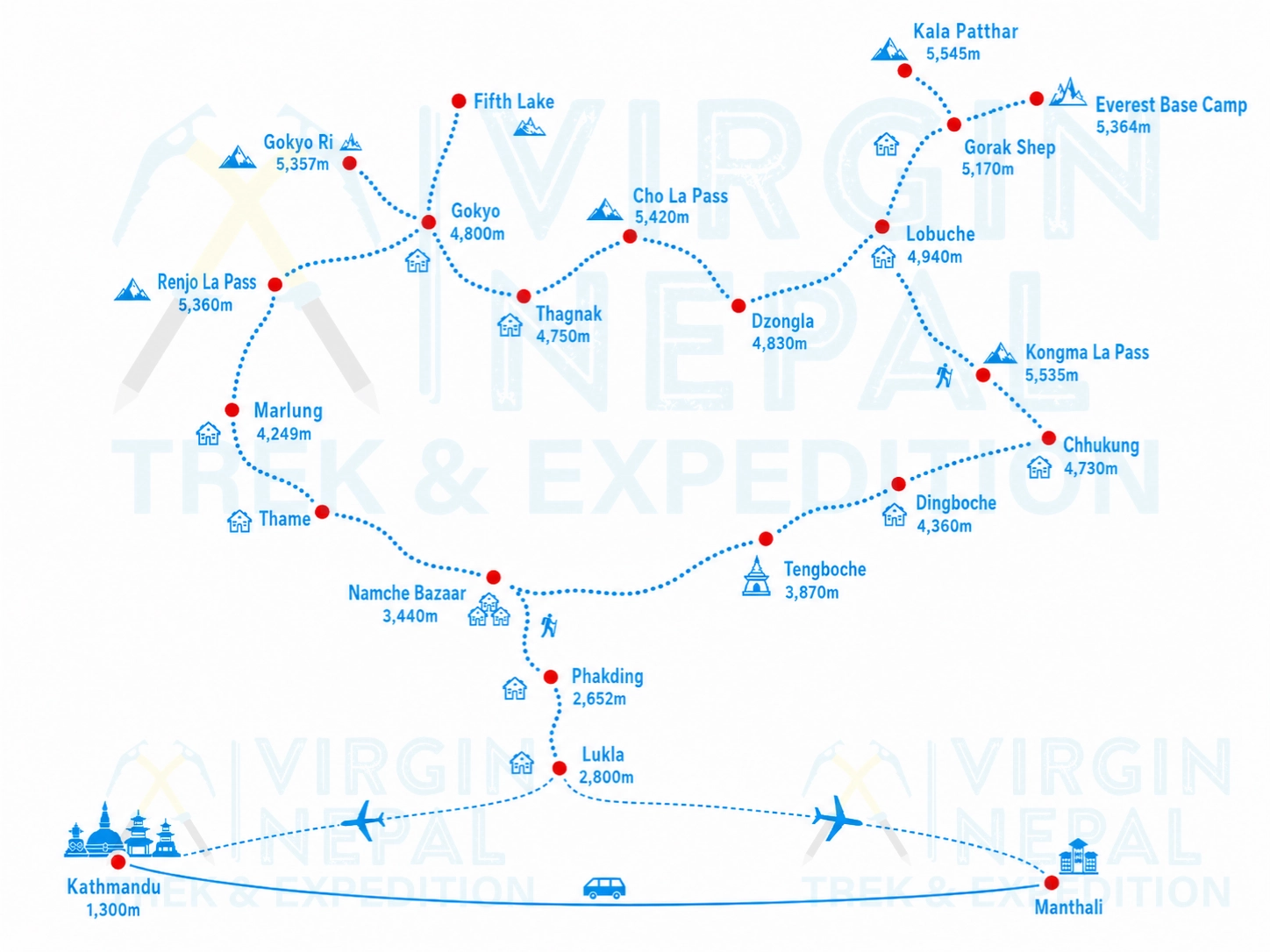
Route map

Everest 3 Pass Trek Route Map

Inclusion & Exclusion

Inclusion
  • Airport pickup and drop-off in Kathmandu
  • Hotel accommodation in Kathmandu
  • Domestic flights as per itinerary
  • Sagarmatha National Park permit and all local permits
  • TIMS (Trekkers' Information Management System) Card
  • Experienced English-speaking trekking guide and porter
  • Tea house accommodation and all standard meals during the trek
  • First-aid kit and emergency coordination
  • Farewell dinner in Kathmandu
Exclusion
  • International airfare and Nepal visa fees
  • Personal travel and rescue insurance
  • Personal trekking gear and equipment
  • Snacks, beverages, Wi-Fi, hot showers, and laundry services
  • Tips for guides and porters
  • Additional expenses due to delays or itinerary changes
  • Any personal expenses not listed in the inclusions

Gallery Highlights

Expedition preparation

Essential Gear

Clothing: Thermal base layers, fleece jacket, insulated down jacket, waterproof shell jacket and pants, trekking trousers, gloves, warm hat, and sun hat.

Footwear: Waterproof trekking boots, camp sandals, trekking socks, and gaiters.

Equipment: Trekking poles, headlamp, daypack, and duffel bag.

Personal Items: UV-protection sunglasses, sunscreen, lip balm, reusable water bottles, water purification tablets, sleeping bags rated to -15 degrees Celsius (5 degrees Fahrenheit), personal medications, and toiletries.

Preparation Advice

Physical Preparation: Begin training at least 3 months before departure. This trek involves consecutive days of high-altitude climbing - strong cardiovascular fitness and leg endurance are essential.

Technical Preparation: Prior experience on high-altitude trekking routes above 5,000 meters is strongly recommended. Comfort on steep, icy, and exposed terrain is important for all three pass crossings.

Altitude Awareness: Three passes above 5,300 meters demand careful acclimatization. Follow your guide's advice closely, never rush ascents, and prioritize scheduled rest days.

Mental Preparation: This is a long and demanding route. Resilience, adaptability, and a genuine passion for remote mountain environments will serve you well throughout the journey.

Insurance: Comprehensive travel insurance covering high-altitude trekking and emergency helicopter evacuation up to at least 6,000 meters is required.

Gear Preparation: Gaiters, warm gloves, and a sleeping bag rated to -15 degrees Celsius are particularly important for the cold conditions near the high passes. Ensure all gear is thoroughly tested before arriving in Nepal.

Terms & Conditions

Booking and Payment: A booking deposit is required to confirm your reservation. The remaining balance must be paid in full before the trek departure date. Please contact our team for specific deposit and payment schedule details.

Travel Insurance: All trekkers must carry valid travel insurance covering high-altitude trekking and emergency helicopter evacuation in Nepal. Coverage must extend to at least 6,000 meters.

Flight Delays and Itinerary Changes: Flights to and from Lukla and Manthali are weather dependent. Delays or itinerary adjustments may occur for safety reasons, and any additional costs incurred as a result are the responsibility of the client.

Guide and Safety Authority: All clients are required to follow the instructions of guides and trekking staff at all times. Virgin Nepal Trek & Expedition reserves the right to modify the itinerary if necessary to ensure the safety and wellbeing of all participants.

Cancellation Policy: All cancellations must be submitted in writing via email or through our official communication channels. Refund eligibility and the amount refunded will depend on how far in advance the cancellation request is received before the scheduled trip, service, or booking date. Cancellations made well in advance may qualify for a partial or full refund, while late cancellations may incur cancellation charges due to operational and administrative costs. Failure to attend without prior notice may result in the booking being treated as non-refundable.In the event that Virgin Nepal Trek & Expedition must cancel or reschedule a trip or service, guests will be offered an alternative departure date, travel credit, or refund where applicable. Refund processing times may vary depending on the payment method and financial institution. Certain deposits, permit fees, or third-party service charges may be non-refundable. Please contact our team directly for complete cancellation terms, refund details, and policy information related to your booking.

Customer Reviews

Talk our Expert

Pasang Sherpa

Managing Director

Meet Pasang Sherpa – Managing Director Namaste, I am Pasang Sherpa. I am the Managing Director and lead climbing guide at Virgin Nepal Trek & Expedition. As a native Sherpa, the mountains of Nepal have been my home, my life, and my life’s work from the very beginning. I began working in the mountains back in 2009 while still completing my high school studies, starting as a trekking guide and growing into a lead expedition leader for multinational groups across the Himalayas. Over the past 15+ years, I have climbed and summited Mt. Everest, Ama Dablam, Island Peak, Mera Peak, and Lobuche Peak—including summiting both Lobuche Peak and the technical Ama Dablam within just five days.   Beyond the famous trails of Everest, Annapurna, and Manaslu, I have personally led remote wilderness camping treks through Upper and Lower Dolpo, Mustang, Makalu, Kanchenjunga, and the Numbur Valley. Having traveled to more than 10 countries around the world, I have seen firsthand how mass commercial tourism can overwhelm local cultures and fragile landscapes—which is why I lead Virgin Nepal Trek with a very different philosophy.     Today, I lead a dedicated team of local Sherpa guides who advocate for sustainable, eco-friendly travel, off-the-beaten-path exploration of untouched Himalayan valleys, and fair, equal opportunities for every local stakeholder—from our porters and guides to remote mountain teahouse families. Our goal is to preserve nature in its untouched, original state while directly improving the livelihoods, income, and working conditions of local residents and mountain crews.   My mission is simple: keep you safe, and help you truly experience the Himalayas—not just walk through them. Guests often tell me they remember three things most about trekking with our team:     1. Safety first, always.I monitor your health and acclimatization every single day, watching your pace, breathing, and energy levels. If the weather shifts or your body needs extra rest, we stop. No summit is worth risking your health. Every trek we lead carries a pulse oximeter, a comprehensive first-aid kit, and 24/7 emergency helicopter rescue coordination.   2. Clear communication. I am fluent in English, Nepali, and Mandarin Chinese. Throughout the journey, I explain everything—why we ascend slowly, why hydration matters at altitude, and what these sacred peaks mean to the Sherpa people. You will never feel lost, rushed, or uncertain on the trail.   3. Genuine respect for culture & nature.The Himalayas are far more than scenic trails—they are fragile ecosystems, living monasteries, and family homes. We practice Leave No Trace principles to keep nature in its original state, avoid overcrowded commercial routes whenever possible, and ensure every village and crew member benefits fairly and sustainably from your visit. Whether you are planning your first Everest Base Camp trek, an expedition into pristine regions like Dolpo or Kanchenjunga, a technical peak climb, or a relaxed family journey through Bhutan, I personally design your route, hand-pick your guide, and stay in daily contact with your team on the trail.   When you travel with Virgin Nepal Trek, you are not just a client—you are an honored guest in my home mountains. I look forward to walking with you.

Share Your Experience

Write a Review

Related Packages

Langtang Valley Trek

10 days
16,512 ft (5,033 m)
moderate
$1,200.00 / per person

Everest Base Camp Trek

14 days
17,598 ft (5,364 m)
moderate
$3,500.00 / per person

Annapurna Circuit Trek

14 days
17,769 ft (5,416 m)
moderate
$2,100.00 / per person

Dolpa Clockwise Trek(Camping)

16 days
17,421 ft (5,310 m)
moderate
$4,800.00 / per person

Numbur Valley(Camping)Trek

12 days
16,404 ft (5,000 m)
moderate
$3,880.00 / per person

Pikey Pass Trek

30 days
13,337 ft (4,065 m)
moderate
$1,000.00 / per person

Related blogs

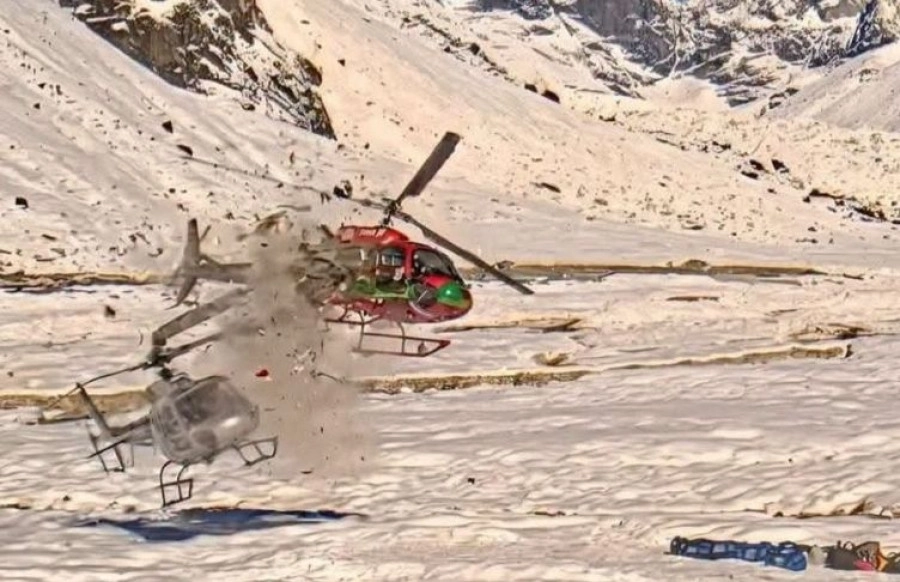
Pheriche Helicopter Incident: Why Expert Ground Logistics Matter in the Everest Region

Pheriche Helicopter Incident: Why Expert Ground Logistics Matter in the Everest Region Understanding the challenges of high-altitude operations, emergency coordination, and responsible trekking management in Nepal’s Khumbu Valley. The helicopter collision at Pheriche on November 3, 2026, is a tragic reminder of the challenges involved in operating in the Everest region. The incident, which occurred during landing operations at the high-altitude helipad, resulted in one fatality and injuries to three people, including both pilots. Authorities are investigating the circumstances surrounding the collision. Our thoughts are with the victim’s family, the injured individuals, and everyone affected by this incident. For trekkers, mountaineers, and international travel partners, this event also highlights an important reality: successful Himalayan travel depends on far more than reaching a destination. It requires experienced local teams, careful planning, and responsible decisions at every stage of the journey. At Virgin Nepal Trek & Expedition, we believe that safety must be the foundation of every trekking and mountaineering operation. Understanding the Pheriche Helicopter Incident Pheriche is an important settlement in Nepal’s Khumbu Valley, situated along the popular Everest Base Camp trekking route. At approximately 4,200 metres above sea level, it serves as a staging point for trekkers, climbers, helicopter operations, and high-altitude logistics. On the morning of November 3, two helicopters operated by Fishtail Air and Air Dynasty collided while attempting to land at Pheriche. The incident occurred at approximately 8:11 a.m. Nepal time. According to initial reports, the aircraft’s rotor blades made contact during landing. One passenger, an Indian national, died, while both pilots and another passenger sustained injuries. Emergency assistance was provided at the scene, and injured individuals were transported for medical treatment. Nepal’s aviation authorities have initiated an investigation into the accident. The precise circumstances and contributing factors remain subject to the official investigation. It would be premature to attribute the collision to a particular cause before the findings are released. The Challenges of High-Altitude Helicopter Operations Helicopter operations in the Everest region take place in an environment where altitude, terrain, weather, and limited infrastructure can create demanding operational conditions. Understanding these challenges helps trekkers and travel partners appreciate why experienced local coordination is essential. 1. High altitude and reduced aircraft performance At high elevations, air density decreases. This can affect helicopter performance, including lift and engine power, depending on the aircraft and operating conditions. Pilots must account for altitude, temperature, aircraft weight, and other operational factors when planning flights and landings. These considerations are especially important when transporting passengers, equipment, or supplies to remote mountain locations. 2. Rapidly changing mountain weather Weather in the Himalayas can change quickly. Wind, cloud cover, snowfall, and visibility can affect flight planning and the feasibility of helicopter operations. Local weather observations and professional aviation assessments are important, but no forecast can eliminate all uncertainty in a mountain environment. Flight decisions must remain with qualified aviation professionals, who may delay, modify, or cancel operations when conditions are unsuitable. 3. Busy landing areas and operational coordination Pheriche is an important transit point for helicopter-supported travel in the Everest region. When aircraft are operating in the same area, coordination between pilots, aviation operators, and ground personnel is essential. However, ground teams cannot control every aspect of an aircraft’s operation. Aviation safety depends on the combined responsibilities of pilots, operators, air traffic and flight coordination systems, and the relevant authorities. The Pheriche incident reinforces the importance of maintaining clear procedures, appropriate communication, and disciplined operational decision-making. Why Ground Logistics Matter in Himalayan Travel Helicopter safety is a responsibility of aviation professionals. Ground logistics, meanwhile, play a critical role in helping trekking and mountaineering operations remain organised, responsive, and prepared for changing conditions. A reliable ground operation begins long before a trekker arrives in the mountains. 1. Experienced local guides and leadership The Khumbu is not simply a destination on a map. It is a living mountain region with its own geography, weather patterns, communities, and logistical realities. Experienced local guides bring practical knowledge of the trails, settlements, acclimatisation routes, and available support facilities. At Virgin Nepal Trek & Expedition, our Sherpa-led approach places local experience and responsible decision-making at the centre of our trekking and mountaineering services. Our teams help guests understand trail conditions, manage daily trekking plans, and make informed decisions when circumstances change. 2. Responsible emergency planning Emergency preparedness is an essential part of high-altitude travel. Before departure, trekkers and operators should understand the available medical facilities, communication options, evacuation procedures, and insurance requirements relevant to their itinerary. Depending on the route and operating conditions, appropriate preparations may include: Emergency contact information and communication equipment. First-aid supplies and trained personnel. Backup arrangements for accommodation and transportation. Coordination with recognised medical and evacuation providers. Contingency plans for weather delays and itinerary changes. Helicopter evacuation is not always possible. Weather, aircraft availability, medical requirements, and operational restrictions can affect whether and when an evacuation can take place. For this reason, responsible trekking plans must account for alternatives and avoid treating helicopter transport as a guaranteed solution. 3. Acclimatisation and health management High-altitude trekking requires careful attention to acclimatisation. The Everest Base Camp route takes trekkers through increasingly elevated terrain, where insufficient acclimatisation can contribute to altitude-related illness. A responsible itinerary should allow appropriate time for acclimatisation, provide clear guidance on symptoms, and establish procedures for responding to medical concerns. Trekkers should communicate health problems promptly and follow the advice of qualified medical professionals and experienced guides. The objective is not simply to complete an itinerary. It is to support a safe and responsible journey through the mountains. 4. Reliable transport and logistical coordination Himalayan trekking involves many interconnected services, including flights, road transfers, accommodation, permits, porters, guides, and equipment. When one part of the operation changes, the rest of the itinerary may need to be adjusted. An experienced destination management company helps coordinate these moving parts, communicate changes, and provide practical alternatives when circumstances require them. For international travel partners, this coordination can make the difference between a well-managed mountain journey and an itinerary that becomes difficult to manage when unexpected challenges arise. The Virgin Nepal Trek & Expedition Approach Virgin Nepal Trek & Expedition is a Nepal-based trekking and mountaineering operator providing ground support for travellers exploring the Himalayas. Our approach is built around three principles: safety, quality, and respect for the mountains. Local knowledge and Sherpa-led experience Our Sherpa team brings local knowledge and practical experience to trekking and mountaineering operations in Nepal. We believe that understanding the mountain environment, respecting local communities, and making responsible decisions are fundamental to providing a quality travel experience. Practical planning and responsible operations We coordinate essential ground arrangements, including trekking permits, guides, accommodation, transportation, and itinerary planning. For routes involving high-altitude travel, we emphasise preparation, acclimatisation, communication, and contingency planning. Where helicopter transport or evacuation is required, arrangements must be made through appropriately authorised aviation providers and remain subject to their operational decisions. Support for international travel partners We work with international travellers and travel professionals seeking reliable ground arrangements in Nepal. Our services can include itinerary planning, trekking and climbing logistics, local guides, accommodation coordination, transportation, and operational support. For B2B partners, clear communication and dependable local coordination are essential to delivering a smooth client experience. We aim to provide the practical ground support that allows our partners and guests to focus on their Himalayan journey. What Trekkers Should Consider Before Travelling to Everest The Pheriche incident is a reminder that Himalayan travel involves real environmental and operational challenges. Before booking an Everest Base Camp trek or another high-altitude adventure, travellers should consider the following: Choose an experienced, properly licensed trekking operator. Review the itinerary and confirm that it allows appropriate acclimatisation. Understand what medical and emergency support is included. Check that your travel insurance covers the activities and maximum altitude of your trip. Ask how weather delays, flight cancellations, and evacuation arrangements are managed. Follow the advice of your guides and qualified medical professionals. A professional operator should be able to explain its arrangements clearly and honestly, including the limitations of services that depend on weather, aviation providers, or external authorities. Experience the Himalayas with Preparation and Respect The Everest region offers extraordinary opportunities to experience the mountains, Sherpa culture, and the remarkable landscapes of the Khumbu. But a successful Himalayan adventure is not defined by the summit, the photograph, or the number of days spent on the trail. It is defined by the quality of preparation, the experience of the team, the decisions made along the way, and the care taken for everyone involved. At Virgin Nepal Trek & Expedition, we believe that responsible mountain travel begins with thoughtful planning and a commitment to safety at every stage. Whether you are planning an Everest Base Camp trek, a high-altitude expedition, or a customised Himalayan journey, our team can help you understand the logistics and prepare for the realities of travelling in Nepal. Walk with the Real Sherpa. Experience the Real Himalaya. Visit Virgin Nepal Trek & Expedition to explore our Himalayan trekking and mountaineering services or discuss a customised itinerary with our team. Editorial note: This article discusses the Pheriche helicopter collision based on initial reports available on November 3, 2026. The cause of the accident has not been established here. The article is intended for travel information and does not replace official aviation safety guidance or medical advice.