NCC (Camping)Trek

NCC (Camping)Trek

Trip Description

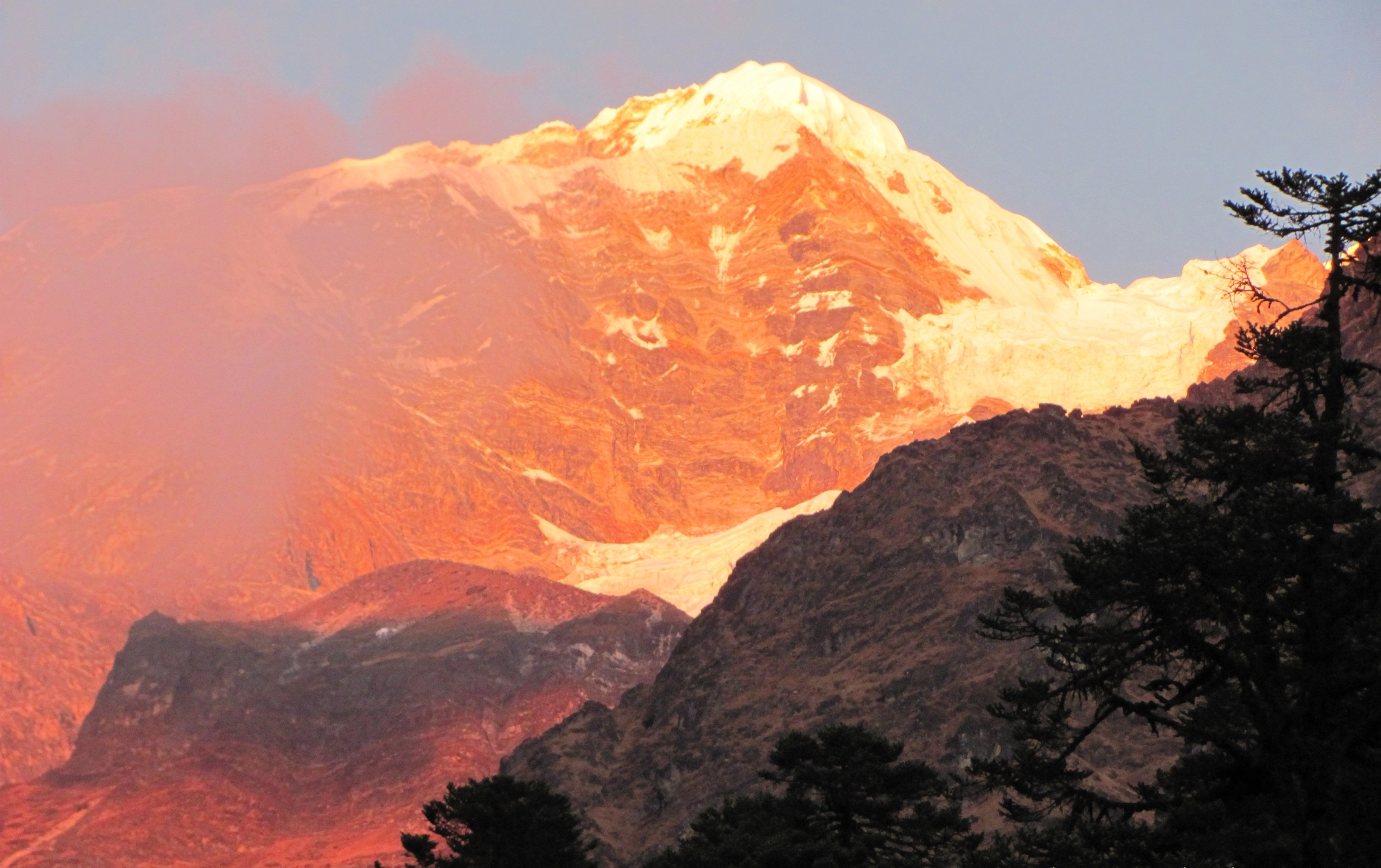
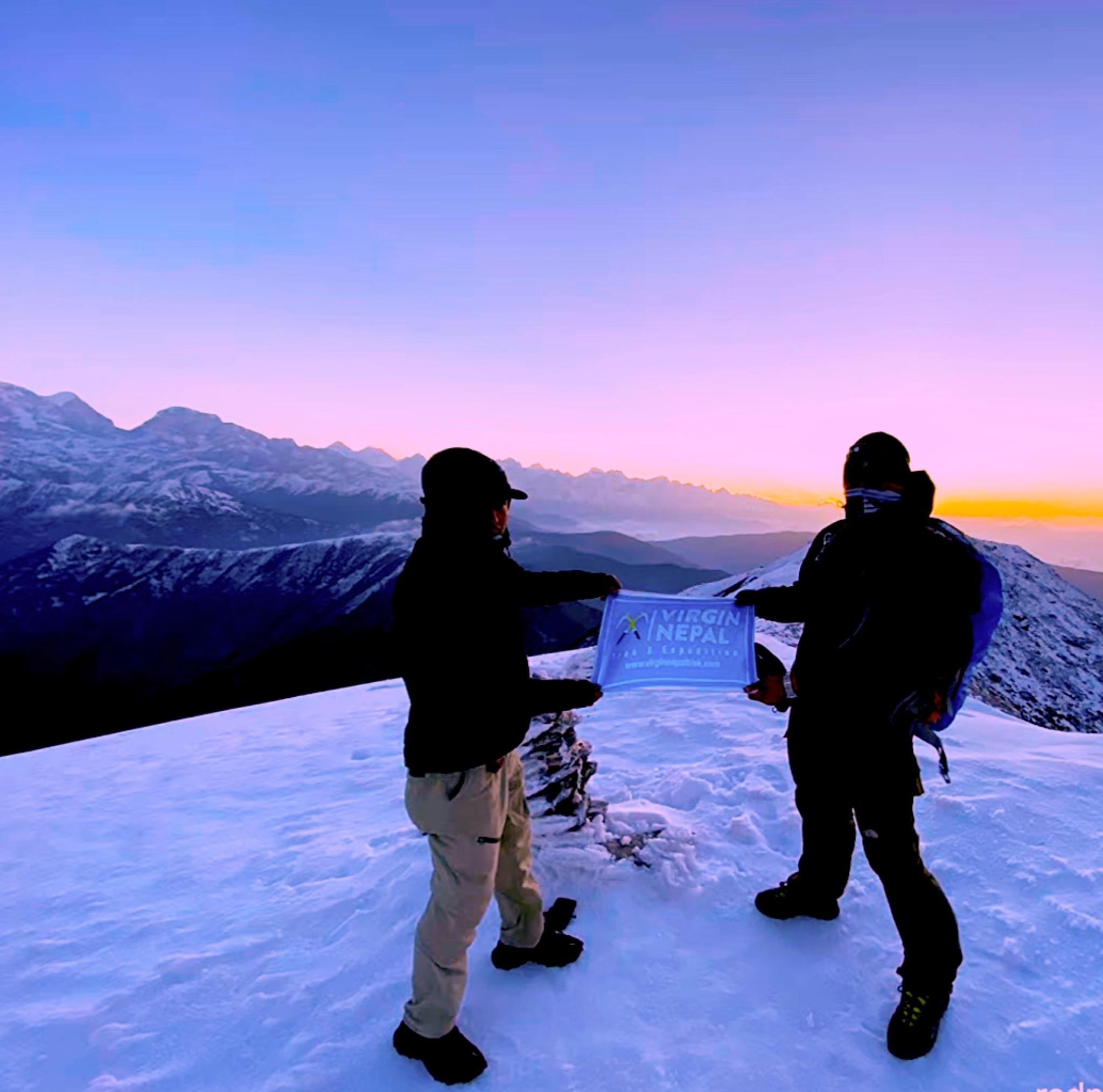
The Numbur Cheese Circuit is one of Nepal's most unique and enchanting trekking experiences, looping through the sacred landscapes below Numbur (6,959 m) - the holy mountain of the Solu Khumbu - through a world of high yak pastures, ancient Sherpa villages, and traditional cheese-making farms that give this remarkable circuit its name. It is a trek that nourishes the body, the mind, and the senses in equal measure.

The route winds through dense rhododendron and oak forests, terraced hillside settlements, and open alpine ridgelines before reaching the high pastures where yak herders have produced some of Nepal's finest cheese for generations. The landscape is raw, peaceful, and deeply beautiful - a Himalayan world entirely untouched by the pressures of mass tourism and all the more rewarding for it.

What sets the Numbur Cheese Circuit apart is its combination of outstanding natural scenery and genuine cultural immersion. Visiting the traditional cheese factories at Thodung and the high pastures of the circuit offers a fascinating and rarely seen window into a centuries-old mountain livelihood that continues to thrive in the shadow of the sacred Numbur peak.

With Virgin Nepal Trek & Expedition, you complete the Numbur Cheese Circuit with a knowledgeable and experienced team dedicated to giving you a safe, comfortable, and truly memorable journey through one of Nepal's most underrated and rewarding trekking destinations.

Culture of the Gaurishankar Region

The Numbur Cheese Circuit passes through the heart of the Solu Khumbu's Sherpa communities, where Buddhist monasteries, prayer wheel corridors, and ancient trade routes reflect a culture shaped entirely by the rhythms of the high mountains. The traditional cheese-making heritage of this region - sustained by yak herding families across generations - is a living cultural practice as fascinating and meaningful as any monastery or festival. Thodung Cheese Factory, one of Nepal's oldest, is a highlight of the circuit and a genuinely memorable encounter with mountain livelihood at its most authentic.

Best Season

Spring (March to May)

Blooming rhododendrons, mild temperatures, and lush high pastures make spring the most visually rewarding season for the Numbur Cheese Circuit.

Autumn (October to November)

Clear skies, stable weather, and excellent mountain visibility offer outstanding trekking conditions throughout the circuit.

Contact our team to plan your Numbur Cheese Circuit with the right timing and full support for your adventure.
highlights

Trek beneath the sacred Numbur Peak at 6,959 meters.
Explore peaceful and less-crowded trails through the Solu Khumbu region.
Visit traditional yak cheese farms and the historic Thodung Cheese Factory.
Experience authentic Sherpa culture, Buddhist traditions, and mountain villages.
Trek through rhododendron and oak forests, alpine pastures, and scenic ridges.
Discover traditional yak herding and centuries-old Himalayan cheese-making practices.
Enjoy breathtaking mountain scenery in an untouched and tranquil Himalayan setting.
Best seasons: Spring (March–May) and Autumn (October–November).

Day by day Itinerary

Upon arrival at Tribhuvan International Airport,  a representative from Virgin Nepal Trek & Expedition will warmly welcome you and transfer you to your hotel in Kathmandu. After check-in, you may rest or explore the lively streets of Thamel. In the evening, you will meet your trekking guide for a welcome dinner and trip briefing. Overnight stay in Kathmandu.


Max Altitude

1,300m/4,264 ft

Accommodation

Hotel in Kathmandu

Meals

Dinner

Spend the day exploring Kathmandu's historic landmarks, including UNESCO World Heritage Sites like Durbar Square, Swayambhunath (Monkey Temple), and Boudhanath Stupa. Today includes a full trip briefing and gear check to ensure you are fully prepared or have time to hire/buy equipment locally. Overnight at the hotel.

Max Altitude

1,400 meters (4,593 feet)

Accommodation

4-Star Hotel in Kathmandu

Meals

Breakfast, Lunch, Dinner

Enjoy a 6 to 8-hour scenic drive over well-paved roads to Shivalaya, the gateway for the Numbur Cheese Circuit located along the picturesque Khimti River. Overnight at a lodge or tented camp.

Max Altitude

1,790m

Accommodation

Hotel/Lodge

Meals

Breakfast,Lunch, Dinner

Trek Duration: Approximately 4 hours

Today's trail follows a leisurely northward route along the Khimti Khola River to the small village of Khahare. Just beyond Shivalaya, the valley opens to reveal the first snow-capped peaks of the Rolwaling Himal Range - a preview of the mountain scenery that unfolds over the coming days. The trail rises and falls through terraced fields, crosses the river several times, and climbs steeply along a cliffside section before arriving at Khahare, a tiny seasonal settlement of fewer than five houses occupied by yak herders during the winter months. The evening is spent in a Sherpa family home-stay, with traditional dishes made from yak cheese, potato, and barley. Overnight stay in Khahare.


Max Altitude

2,175 m / 7,135 ft

Accommodation

Home-stay

Meals

All Meals [Breakfast, Lunch, Dinner]

Trek Duration: Approximately 3-4 hours

The trail continues through wilderness terrain alongside the Khimti River, with the route becoming progressively more remote and atmospheric. Panipakha serves as the first eco-camping site of the trek, set among scattered yak and chauri sheds beneath towering pine trees. The setting is peaceful and wild, and the sunset views from Panipakha are spectacular. Overnight camping at Panipakha.


Max Altitude

3,105 m/10,334 ft

Accommodation

Hotel/Lodge

Meals

Breakfast, Lunch, Dinner

Trek Duration: Approximately 3-4 hours

The trail ascends steadily through conifer and rhododendron forest before leveling out at the summer pastures of Maanedanda. This flat ridgeline offers a striking contrast of thick green forest on either side, carved by numerous steep waterfalls cascading down from the slopes above. The sense of elevation and openness at Maanedanda makes it one of the most rewarding viewpoints on the entire circuit. Overnight camping at Maanedanda.


Max Altitude

3,940 m/12,926 ft

Accommodation

C

Meals

Breakfast, Lunch, Dinner

Trek Duration: Approximately 4-5 hours

The trail climbs toward Jatapokhari, passing through alpine pastures where the vegetation transitions to scrubby Sunpati, a rare and aromatic mountain herb. A dramatic waterfall marks the approach to Jatapokhari - a sacred high-altitude lake set in the glacial cirque of Panchpokhari Danda. The lake is a significant pilgrimage destination, drawing over 3,000 devotees each year for the Janai Purnima festival in August, when bathing in its holy waters is believed to grant wishes. The surrounding area encompasses five small glacial lakes collectively known as Panchpokhari, and sunset views of Numbur and Parchemo from here are outstanding. A side trip to Baula Pokhari - known locally as the Mad Lake - is recommended for those feeling adventurous. Overnight camping at Jatapokhari.


Accommodation

Hotel/Lodge

Meals

Breakfast, Lunch, Dinner

Trek Duration: 2 days of trekking

These two days cover one of the most dramatic and rewarding sections of the entire circuit. The morning begins with a challenging crossing of Panchpokhari Pass at 4,605 meters, climbing to the base camp of Bigphera Go Nup (Pathibhara) before descending to a glacier river walk toward Tare. The panoramic views from the pass extend across the Rolwaling, Numbur, and Everest ranges in a sweeping mountain panorama that is among the finest available on any trekking route in this region.

The trail continues to Kholakharka, where the dramatic high-altitude scenery of glaciated valleys and folded hills to the south is breathtaking. From here, the route crosses the white Nupche River through open yak pastures where fresh cheese can be sampled directly from the herders. A worthwhile side trip leads to Khola Seer (4,469 m), where the hidden Lhasa Lake - a vast and remote glacial lake with a stunning Tibetan mountain backdrop - rewards those with the time and energy to seek it out. Wildlife including Himalayan tahr and, if you are fortunate, snow leopards may be spotted along this section. Overnight wilderness camping.

Accommodation

Hotel/Lodge

Meals

Breakfast, Lunch, Dinner

Trek Duration: 2 days of trekking

These two days cover the most strenuous and remote section of the Numbur Cheese Circuit. The trail from Tare climbs to the Gyajo La - also known as Thulo Lapcha - at 4,880 meters, a high mountain pass traditionally used by local Sherpas to move yaks between valleys. The mountain views north toward Tibet from the pass are extraordinary in their scale and clarity.

The descent leads gradually to the seasonal pastures of Lakhedanda (4,315 m) in the Likhu Khola Valley. From here, striking views of Dudh Pokhari - the Milky Lake - surrounded by the Surmoche and Likhu Glaciers and their towering moraines unfold below. The trail follows the turbulent Likhu Khola River downstream through truly wild terrain before arriving at the remote yak pastures of Ngeju (3,690 m). Ngeju is home to two cheese factories and numerous chauri sheds along the riverbank. A short side trip from Ngeju leads to Kau Gumba, an ancient Buddhist shrine located above the treeline in the upper Likhu Khola Valley, enclosed by a dramatic sweep of high rock and snow peaks. Overnight stay in Ngeju.


Max Altitude

4,880 m

Accommodation

Hotel/Lodge

Meals

Breakfast, Lunch, Dinner

Trek Duration: Approximately 5-6 hours

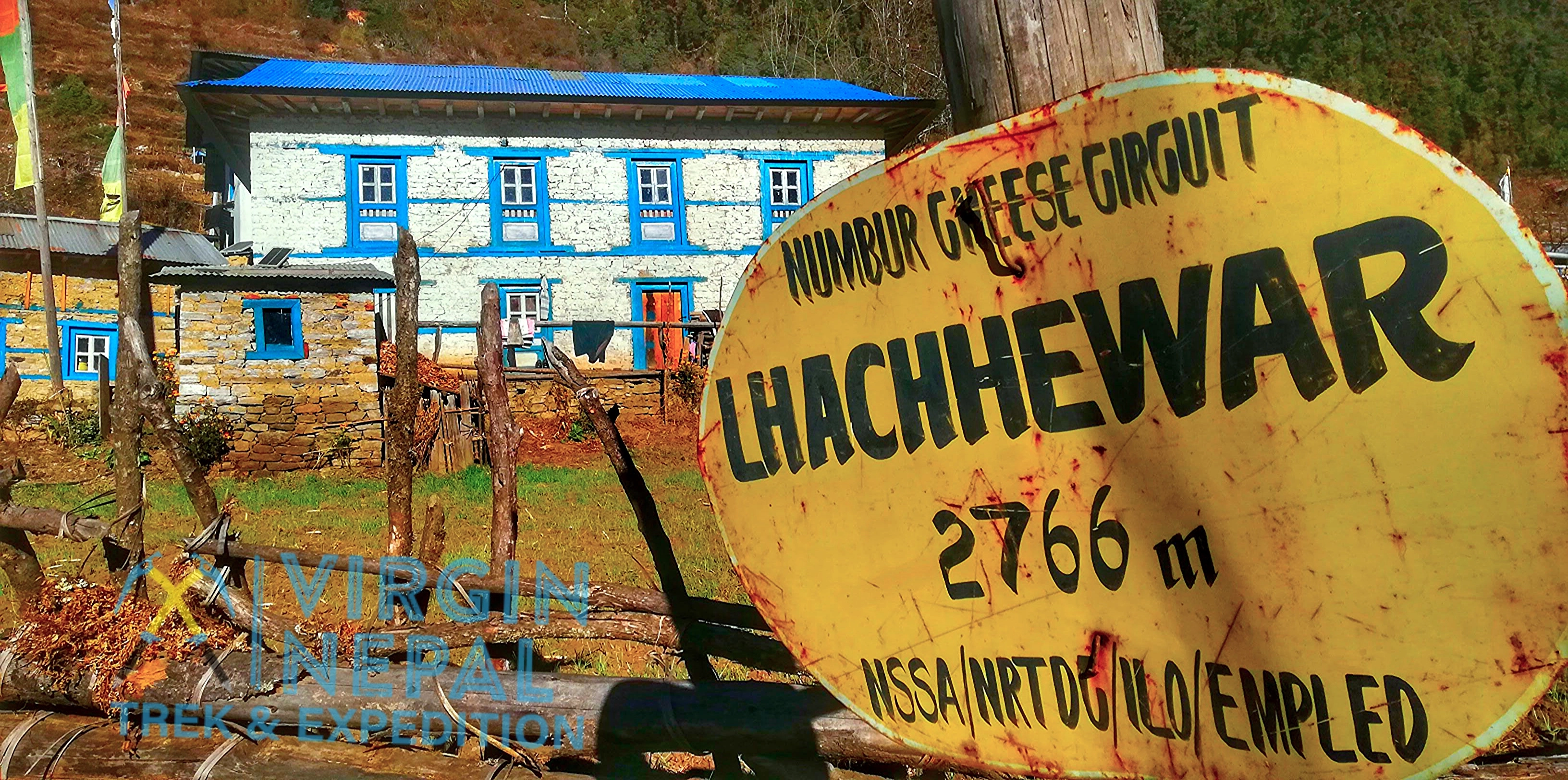
Leaving Ngeju, the trail weaves through ancient and dense forest alongside the Likhu Khola River before emerging into the welcoming Sherpa village of Lhachhewar - also known locally as Chhewar(Kshorma). Lhachhewar is considered one of the most beautiful Sherpa villages in the upper Ramechhap region, with an exceptional combination of astonishing mountain landscapes, cultural richness, and the genuine warmth of its residents. The village maintains its traditional Sherpa way of life in a largely undisturbed form, making the evening here one of the most authentic cultural experiences of the entire circuit. Overnight home-stay in Lhachhewar.


Max Altitude

2,665 m / 8,743 ft

Accommodation

Hotel/Lodge

Meals

Breakfast, Lunch, Dinner

Trek Duration: Approximately 5–6 hours

The final day on the trail retraces the route through forests and farmlands back to Gumdel. The return journey offers a different perspective on the landscapes passed earlier in the trek, and a quiet moment to reflect on the journey through the Numbur Valley.

Accommodation

Hotel/Lodge

Meals

Breakfast, Lunch, Dinner

Drive Duration: Approximately 4-5 hours

The final drive brings you back to Kathmandu, where the afternoon is free for relaxation, last-minute shopping in Thamel, or visiting any remaining Kathmandu landmarks. In the evening, a farewell dinner hosted by Virgin Nepal Trek & Expedition celebrates the successful completion of the Clockwise NCC . Depending on your international flight schedule, our representative will transfer you to Tribhuvan International Airport for your departure.


Max Altitude

1,300 m / 4,264 ft

Accommodation

Hotel/Lodge

Meals

Breakfast, Farewell Dinner

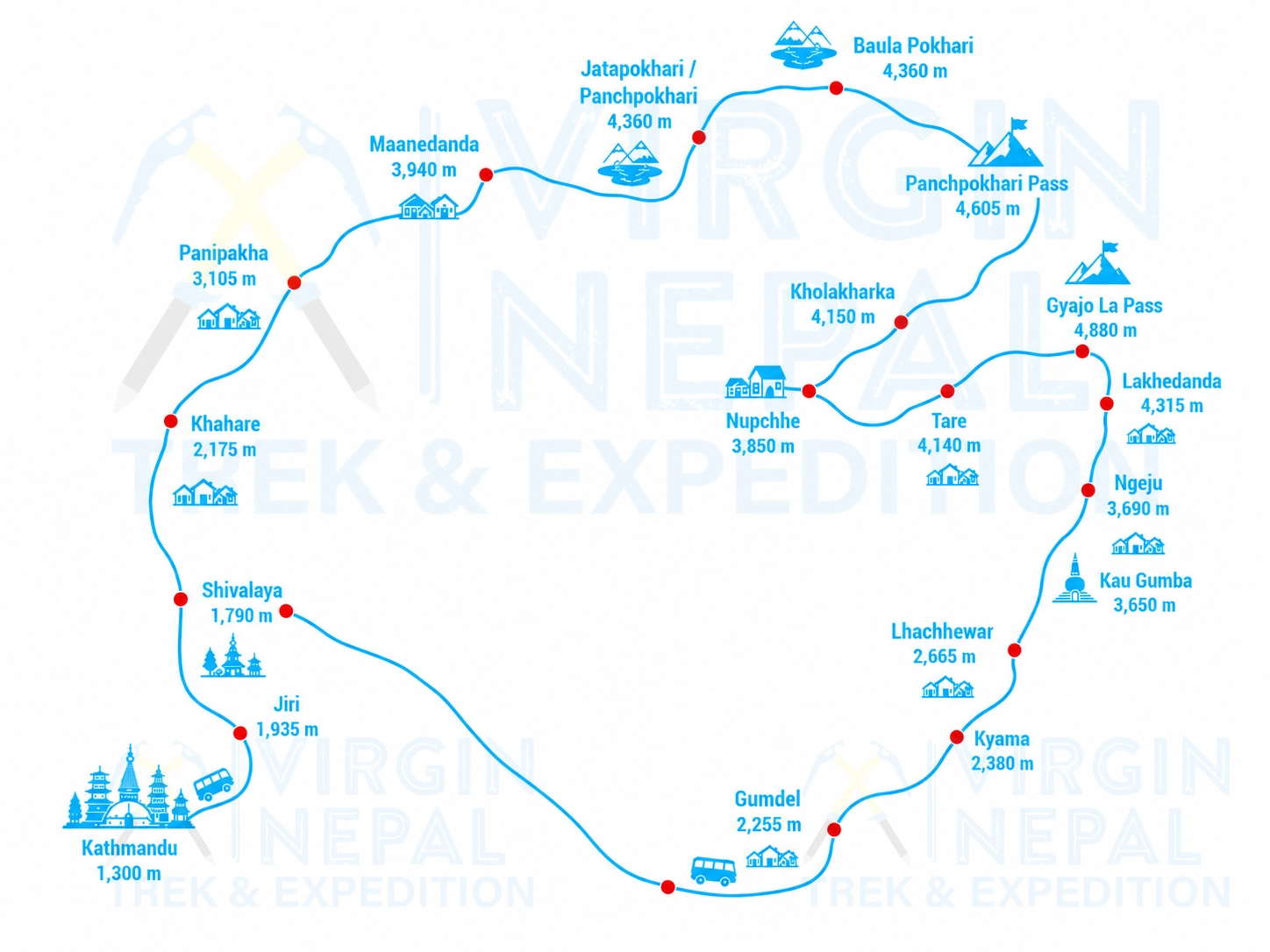
Route map

NCC (Camping)Trek Route Map

Inclusion & Exclusion

Inclusion
  • Airport pickup and drop-off in Kathmandu
  • Hotel accommodation in Kathmandu
  • Domestic transport as per itinerary
  • Required trekking permits and local fees
  • TIMS (Trekkers' Information Management System) Card
  • Experienced English-speaking trekking guide and porter
  • Tea house, home-stay, and camping accommodation as per itinerary
  • All standard meals during the trek
  • First-aid kit and emergency coordination
  • Farewell dinner in Kathmandu
Exclusion
  • International airfare and Nepal visa fees
  • Personal travel and rescue insurance
  • Personal trekking gear and equipment
  • Snacks, beverages, Wi-Fi, hot showers, and laundry services
  • Tips for guides and porters
  • Additional expenses due to delays or itinerary changes
  • Any personal expenses not listed in the inclusions

Expedition preparation

Essential Gear

Clothing: Thermal base layers, fleece jacket, insulated jacket, waterproof shell jacket and pants, trekking trousers, gloves, warm hat, and sun hat.

Footwear: Waterproof trekking boots, camp sandals, and comfortable trekking socks.

Equipment: Trekking poles, headlamp, daypack, and duffel bag.

Personal Items: UV-protection sunglasses, sunscreen, lip balm, reusable water bottles, water purification tablets, sleeping bag rated to -10 degrees Celsius (14 degrees Fahrenheit), personal medications, and toiletries.

Preparation Advice

Physical Preparation: Begin training 6 to 8 weeks before departure with regular hiking and loaded pack walks. The circuit involves steady climbing on remote trails that rewards good overall fitness and endurance.

Technical Preparation: No technical skills are required. Comfort on steep and uneven mountain terrain is sufficient for this trek.

Altitude Awareness: The trek reaches approximately 4,500 meters at its highest point. Stay well hydrated, walk at a steady pace, and inform your guide immediately if you experience any altitude discomfort.

Mental Preparation: The Numbur Cheese Circuit is a quiet and deeply rewarding journey. Come with curiosity and an openness to the slower, more authentic rhythm of life in Nepal's lesser-visited mountain communities.

Insurance: Comprehensive travel insurance covering high-altitude trekking and emergency helicopter evacuation up to at least 5,000 meters is required.

Gear Preparation: Reliable waterproof layers and well broken-in boots are essential for the varied terrain and unpredictable weather conditions of this circuit.

Terms & Conditions

Booking and Payment: A booking deposit is required to confirm your reservation. The remaining balance must be paid in full before the trek departure date. Please contact our team for specific deposit and payment schedule details.

Travel Insurance: All trekkers must carry valid travel insurance covering high-altitude trekking and emergency helicopter evacuation in Nepal. Coverage must extend to at least 5,000 meters.

Road Transport and Itinerary Changes: Road transport segments are subject to weather and road conditions in remote areas. Delays or itinerary adjustments may occur for safety reasons, and any additional costs incurred as a result are the responsibility of the client.

Guide and Safety Authority: All clients are required to follow the instructions of guides and trekking staff at all times. Virgin Nepal Trek & Expedition reserves the right to modify the itinerary if necessary to ensure the safety and wellbeing of all participants.

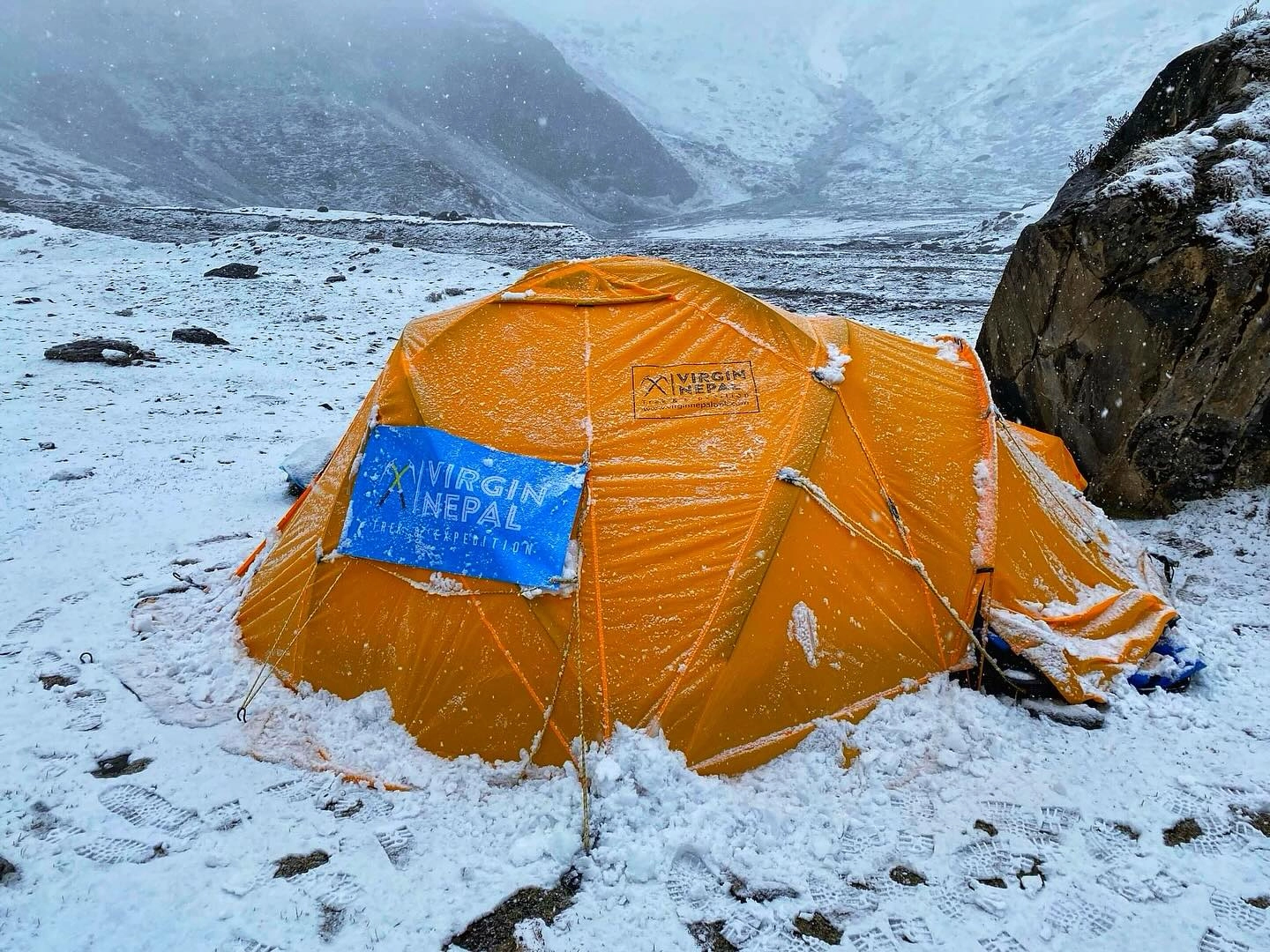
Camping Sections: Several days of this trek involve eco-camping and wilderness camping in remote areas. All camping equipment and kitchen staff are provided by Virgin Nepal Trek & Expedition as part of the full-service guided package.

Cancellation Policy: All cancellations must be submitted in writing via email or through our official communication channels. Refund eligibility and the amount refunded will depend on how far in advance the cancellation request is received before the scheduled trip, service, or booking date. Cancellations made well in advance may qualify for a partial or full refund, while late cancellations may incur cancellation charges due to operational and administrative costs. Failure to attend without prior notice may result in the booking being treated as non-refundable.In the event that Virgin Nepal Trek & Expedition must cancel or reschedule a trip or service, guests will be offered an alternative departure date, travel credit, or refund where applicable. Refund processing times may vary depending on the payment method and financial institution. Certain deposits, permit fees, or third-party service charges may be non-refundable. Please contact our team directly for complete cancellation terms, refund details, and policy information related to your booking.

Talk our Expert

Pasang Sherpa

Managing Director

Meet Pasang Sherpa – Managing Director Namaste, I am Pasang Sherpa. I am the Managing Director and lead climbing guide at Virgin Nepal Trek & Expedition. As a native Sherpa, the mountains of Nepal have been my home, my life, and my life’s work from the very beginning. I began working in the mountains back in 2009 while still completing my high school (10+2) studies, starting as a trekking guide and growing into a lead expedition leader for multinational groups across the Himalayas. Over the past 17+ years, I have climbed and summited Mt. Everest, Ama Dablam, Island Peak, Mera Peak, and Lobuche Peak—including summiting both Lobuche Peak and the technical Ama Dablam within just five days. Beyond the famous trails of Everest, Annapurna, and Manaslu, I have personally led remote wilderness camping treks through Upper and Lower Dolpo, Mustang, Makalu, Kanchenjunga, and the Numbur Valley. Having traveled to more than 10 countries around the world, I have seen firsthand how mass commercial tourism can overwhelm local cultures and fragile landscapes—which is why I lead Virgin Nepal Trek with a very different philosophy. Today, I lead a dedicated team of local Sherpa guides who advocate for sustainable, eco-friendly travel, off-the-beaten-path exploration of untouched Himalayan valleys, and fair, equal opportunities for every local stakeholder—from our porters and guides to remote mountain teahouse families. Our goal is to preserve nature in its untouched, original state while directly improving the livelihoods, income, and working conditions of local residents and mountain crews. My mission is simple: keep you safe, and help you truly experience the Himalayas—not just walk through them. Guests often tell me they remember three things most about trekking with our team: 1. Safety first, always.I monitor your health and acclimatization every single day, watching your pace, breathing, and energy levels. If the weather shifts or your body needs extra rest, we stop. No summit is worth risking your health. Every trek we lead carries a pulse oximeter, a comprehensive first-aid kit, and 24/7 emergency helicopter rescue coordination. 2. Clear communication.I am fluent in English, Nepali, and Mandarin Chinese. Throughout the journey, I explain everything—why we ascend slowly, why hydration matters at altitude, and what these sacred peaks mean to the Sherpa people. You will never feel lost, rushed, or uncertain on the trail. 3. Genuine respect for culture & nature.The Himalayas are far more than scenic trails—they are fragile ecosystems, living monasteries, and family homes. We practice Leave No Trace principles to keep nature in its original state, avoid overcrowded commercial routes whenever possible, and ensure every village and crew member benefits fairly and sustainably from your visit. Whether you are planning your first Everest Base Camp trek, an expedition into pristine regions like Dolpo or Kanchenjunga, a technical peak climb, or a relaxed family journey through Bhutan, I personally design your route, hand-pick your guide, and stay in daily contact with your team on the trail. When you travel with Virgin Nepal Trek, you are not just a client—you are an honored guest in my home mountains. I look forward to walking with you. Pasang SherpaManaging DirectorVirgin Nepal Trek & Expedition Pvt. Ltd.Kathmandu, NepalWhatsApp: +977-9843279729Email: pasangsherpa@virginnepaltrek.com

Share Your Experience

Write a Review

Related Packages

Langtang Valley Trek

10 days
16,512 ft (5,033 m)
moderate
$1,200.00 / per person

Annapurna Circuit Trek

14 days
17,769 ft (5,416 m)
moderate
$2,100.00 / per person

Dolpa Clockwise Trek(Camping)

16 days
17,421 ft (5,310 m)
moderate
$4,800.00 / per person

Numbur Valley(Camping)Trek

12 days
16,404 ft (5,000 m)
moderate
$3,880.00 / per person

Pikey Pass Trek

30 days
13,337 ft (4,065 m)
moderate
$1,000.00 / per person

Everest 3 Pass Trek

20 days
18,159 ft (5,535 m)
hard
$4,080.00 / per person

Related blogs

Karl Bushby’s 28-Year Global Walk: Goliath Expedition

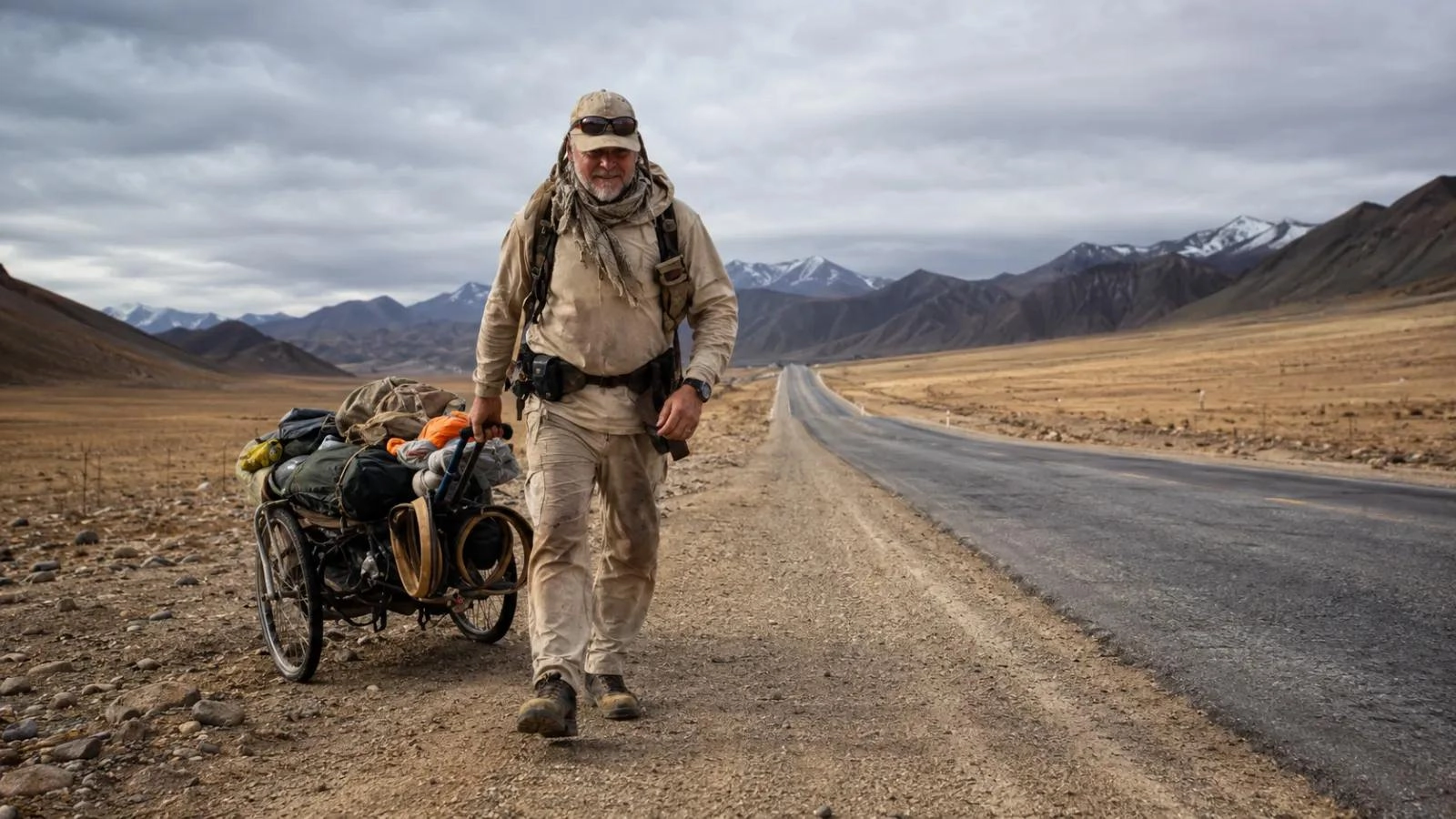
Karl Bushby’s 28-Year Global Walk: The Extraordinary Goliath Expedition Comes to an End From the southern tip of South America to his family home in England, British explorer Karl Bushby has completed one of the most extraordinary human endurance journeys ever undertaken — walking approximately 50,000 kilometres across four continents and 30 countries over 28 years. On November 2, 2026, British adventurer and former paratrooper Karl Bushby finally returned to his family home in Hull, England, bringing an extraordinary chapter of global exploration to a close. Twenty-eight years earlier, on November 1, 1998, a 29-year-old Bushby had departed from Punta Arenas, Chile, with an ambitious mission: to reach his home in the United Kingdom by travelling across the world without using motorised transport to advance along his planned route. Now aged 57, Bushby completed the approximately 31,000-mile (50,000-kilometre) journey, crossing four continents and 30 countries through some of the world's most demanding geographical and political environments. Known as the Goliath Expedition, his extraordinary undertaking became one of the longest and most challenging human-powered journeys ever attempted. His return to Hull was more than the conclusion of an expedition. It represented nearly three decades of determination, resilience, sacrifice, and an unwavering commitment to a seemingly impossible goal. The Goliath Expedition: A Mission That Took 28 Years Karl Bushby's journey began with an idea inspired by a conversation recalled by his father, Keith, who had once discussed whether it was possible to travel between London and New York on foot via the Bering Strait. The geographical concept fascinated Bushby. Rather than simply imagining the possibility, he developed a route connecting South America, North America, Asia, Europe, and ultimately his home in England. On November 1, 1998, he started walking north from Punta Arenas, Chile, carrying basic equipment, limited financial resources, and a determination to complete the journey. His original expectation was that the expedition might take approximately 12 years. However, the realities of international travel, dangerous terrain, financial limitations, immigration restrictions, and geopolitical complications extended the undertaking to 28 years. The expedition became a remarkable demonstration of what long-term human determination can achieve. Two Rules That Defined the Goliath Expedition Throughout the expedition, Bushby maintained two fundamental self-imposed rules. 1. No Transport to Advance the Journey He would not use vehicles or other forms of transport to move forward along his planned route. Where geographical barriers made walking impossible, he sought alternative human-powered methods, including swimming. 2. No Returning Home Until the Journey Was Completed He would not return to the United Kingdom before completing his intended journey back to Hull. These principles shaped almost every major decision throughout the expedition. The rules were not simply about walking a long distance. They established a personal commitment to completing a geographical journey without abandoning its intended route. The Most Extraordinary Challenges Along the Route Bushby's expedition crossed environments that present enormous challenges even to experienced explorers. From the isolated wilderness of Patagonia to the frozen Arctic, tropical rainforests, deserts, and international borders, the journey demanded different physical and logistical capabilities at every stage. 1. South America: Beginning at the Edge of the Continent The journey started in Punta Arenas, in southern Chile, near the Strait of Magellan. From Patagonia, Bushby travelled north through South America, encountering challenging landscapes, remote roads, difficult weather, and the logistical demands of travelling independently over enormous distances. One particularly challenging section was the Darién Gap, the roadless region between Colombia and Panama. Its dense rainforest, rugged terrain, rivers, and security risks make it one of the most difficult overland barriers in the Americas. Bushby encountered serious difficulties in the region and was detained in Panama after crossing a restricted border area. 2. The Bering Strait: Crossing Between Two Continents One of the most remarkable chapters of the Goliath Expedition was the Bering Strait crossing in March 2006. The strait separates Alaska in North America from Russia in Asia, with the Diomede Islands located between the two countries. Bushby and American adventurer Dimitri Kieffer attempted to cross the frozen waters using shifting Arctic sea ice. This was not an ordinary overland crossing. The pair faced moving ice, powerful ocean currents, freezing temperatures, open-water channels, and the constant danger of falling through unstable ice. Their crossing covered a far greater distance than the approximately 90-kilometre width of the strait at its narrowest point because drifting ice and changing conditions repeatedly altered their route. The expedition encountered life-threatening situations, including near-drowning experiences and the threat of polar bears. After reaching Russian territory, they also faced legal difficulties associated with entering a restricted border area. The Bering Strait crossing became one of the defining achievements of Bushby's global journey. 3. Russia: The Challenge of Borders and Bureaucracy Following the Arctic crossing, Russia became one of the most complicated stages of the expedition. The country's enormous geographical scale, harsh winter conditions, restricted border areas, and visa requirements made progress exceptionally difficult. Bushby experienced prolonged interruptions because of immigration and visa complications. At one stage, difficulties obtaining Russian permission forced him to undertake a separate protest walk from Los Angeles to Washington, D.C., to draw attention to his situation. His eventual progress through Russia demonstrated that international expeditions require more than physical endurance. They also demand patience, administrative preparation, diplomatic awareness, and the ability to adapt to changing political circumstances. 4. Crossing the Caspian Sea: A Human-Powered Solution Another remarkable geographical challenge came when Bushby reached the Caspian Sea. Rather than using a conventional boat to advance his route, he swam across the sea. The crossing added another extraordinary chapter to an expedition that had already involved deserts, mountains, frozen landscapes, and international borders. It demonstrated the unconventional solutions required to maintain the fundamental principles of his journey. 5. Turkey and the Bosphorus: From Asia into Europe After progressing through the Caucasus region, Bushby reached Istanbul, Turkey, in April 2025. Istanbul occupies a unique geographical position between Europe and Asia, separated by the Bosphorus Strait. Crossing into Europe represented an important milestone after years of travelling through Asia. His route continued through Europe towards the United Kingdom, bringing the expedition closer to its final destination. 6. The English Channel: The Final Major Water Crossing On October 5, 2026, Bushby completed another extraordinary challenge by swimming across the English Channel. He reached British soil at Shakespeare Beach near Dover, marking his return to the United Kingdom. However, his journey was not yet finished. Approximately 400 kilometres remained between Dover and Hull. He continued north on foot, pushing his expedition cart, known as The Beast, through the final stages of the journey. His arrival in Hull on November 2, 2026, finally brought the 28-year Goliath Expedition to its intended conclusion. The Human Cost of a 28-Year Expedition Behind the geographical achievements was a deeply personal story. Bushby began his expedition at 29 and returned at 57. During those years, the world experienced enormous changes, including technological revolutions, political conflicts, international border restrictions, and the COVID-19 pandemic. His expedition also involved extended periods away from family and the ordinary routines of civilian life. According to reports surrounding his return, Bushby reunited with his mother, Angela, and his son, Adam, and met his 12-year-old granddaughter for the first time. His return attracted significant public attention in Hull, where crowds gathered to welcome him home. Yet completing the expedition also presented a new challenge: adjusting to everyday life after spending almost three decades pursuing one extraordinary objective. For an explorer whose identity had been shaped by the road, returning home represented the beginning of an entirely different journey. What Karl Bushby's Journey Teaches the Global Adventure Community The Goliath Expedition offers important lessons that extend beyond walking and endurance sports. 1. Preparation Is the Foundation of Exploration Long-distance expeditions require careful route planning, logistical preparation, equipment management, and contingency arrangements. Even the strongest physical abilities cannot eliminate the importance of preparation. 2. Adaptability Matters More Than Perfect Conditions Bushby's journey was repeatedly interrupted by circumstances outside his control. Weather, political restrictions, visa difficulties, and geographical obstacles forced him to reconsider his plans. The ability to adapt while remaining committed to a long-term objective was central to the expedition. 3. Exploration Requires Respect for Nature From the Arctic sea ice to the tropical rainforest, every environment presented its own challenges. Explorers must understand that natural conditions cannot simply be controlled through determination. Respecting environmental limitations and recognising when conditions become dangerous are essential elements of responsible adventure. 4. Local Knowledge and Human Connections Make Journeys Possible One of the most meaningful aspects of Bushby's story was his acknowledgement that he did not complete the expedition alone. Support from local people, strangers, friends, family, and individuals across different countries helped him continue. This highlights an important truth about international exploration: even the most independent adventurers depend on human connections and local support. From Global Exploration to Himalayan Adventure Karl Bushby's achievement reminds us why exploration continues to inspire people across generations. The desire to discover unfamiliar landscapes, challenge personal limitations, and experience the natural world remains central to trekking, mountaineering, and adventure travel. The Himalayas represent another extraordinary chapter in this global tradition of exploration. From the legendary Everest region and the remote valleys of the Khumbu to the wilderness trails of Dolpo, Mustang, and the high-altitude landscapes surrounding the world's great Himalayan peaks, Nepal offers remarkable opportunities for people who want to experience adventure beyond conventional travel. At Virgin Nepal Trek & Expedition, we believe that meaningful mountain experiences begin with preparation, local knowledge, responsible leadership, and respect for nature. Our Sherpa-led trekking and mountaineering operations are built around the belief that the mountains are not simply destinations to conquer. They are environments to understand, respect, and experience responsibly. Whether you dream of completing the Everest Base Camp trek, exploring remote Himalayan trails, or attempting a challenging high-altitude expedition, the spirit of exploration begins with taking that first step. Karl Bushby spent 28 years following a line across the world to reach home. Every great adventure begins with a decision to move beyond the familiar. Walk with the Real Sherpa. Experience the Real Himalaya. Explore Himalayan trekking and mountaineering adventures with Virgin Nepal Trek & Expedition: https://www.virginnepaltrek.com/ Frequently Asked Questions (FAQ) Who Is Karl Bushby? Karl Bushby is a British adventurer and former paratrooper from Hull, England. He is known for the Goliath Expedition, a 28-year journey to walk from Punta Arenas, Chile, to his home in the United Kingdom. When Did Karl Bushby Start and Finish His Global Walk? He began the expedition on November 1, 1998, in Punta Arenas, Chile, and completed it on November 2, 2026, when he returned to his family home in Hull, England. How Far Did Karl Bushby Walk? The Associated Press reported that Bushby covered approximately 31,000 miles (50,000 kilometres) across four continents and 30 countries. What Is the Goliath Expedition? The Goliath Expedition is Karl Bushby's 28-year human-powered journey from southern Chile to England, following his self-imposed rules against using transport to advance along his route and returning home before completing the journey. How Did Karl Bushby Cross the Bering Strait? In March 2006, Bushby and adventurer Dimitri Kieffer travelled across the Bering Strait using Arctic sea ice between Alaska and Russia. The crossing involved dangerous moving ice, strong currents, freezing water, and serious survival challenges. Did Karl Bushby Swim Across the English Channel? Yes. On October 5, 2026, he swam across the English Channel and reached British soil at Shakespeare Beach near Dover before continuing the final approximately 400 kilometres to Hull on foot. How Long Did the Goliath Expedition Take? The expedition took approximately 28 years, beginning in November 1998 and concluding in November 2026. Why Is Karl Bushby's Journey Significant? His expedition is significant for its extraordinary distance, duration, geographical challenges, and commitment to travelling around the world without using motorised transport to advance along his planned route. It is widely regarded as one of the most remarkable long-distance human-powered journeys in modern exploration. Editorial note: Distances and route details are approximate and based on published reporting and expedition information. The description of the Goliath Expedition as one of the longest journeys of its kind is not a claim of an independently certified world record.     Photo Source: Social Media | Used for editorial and informational purposes.