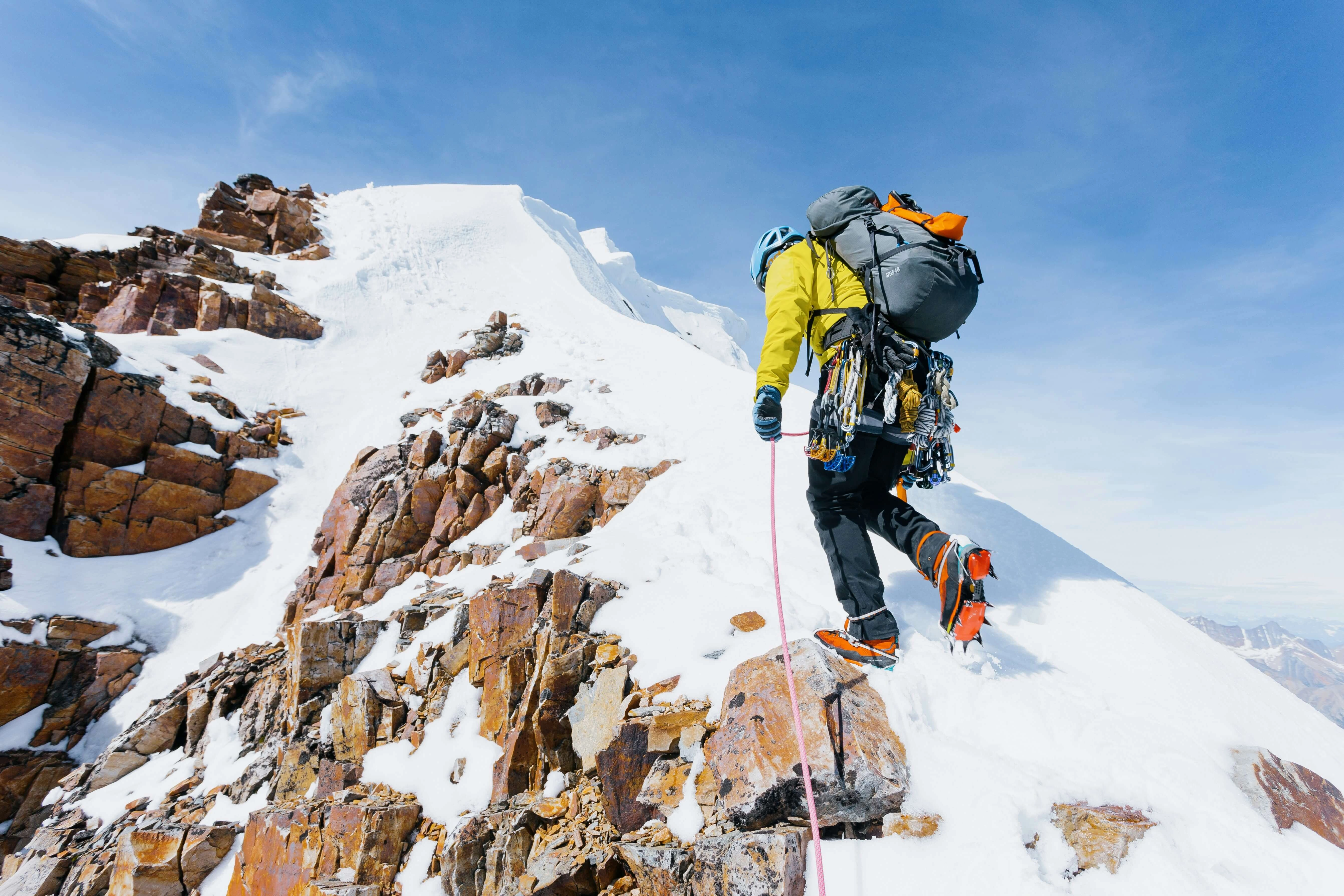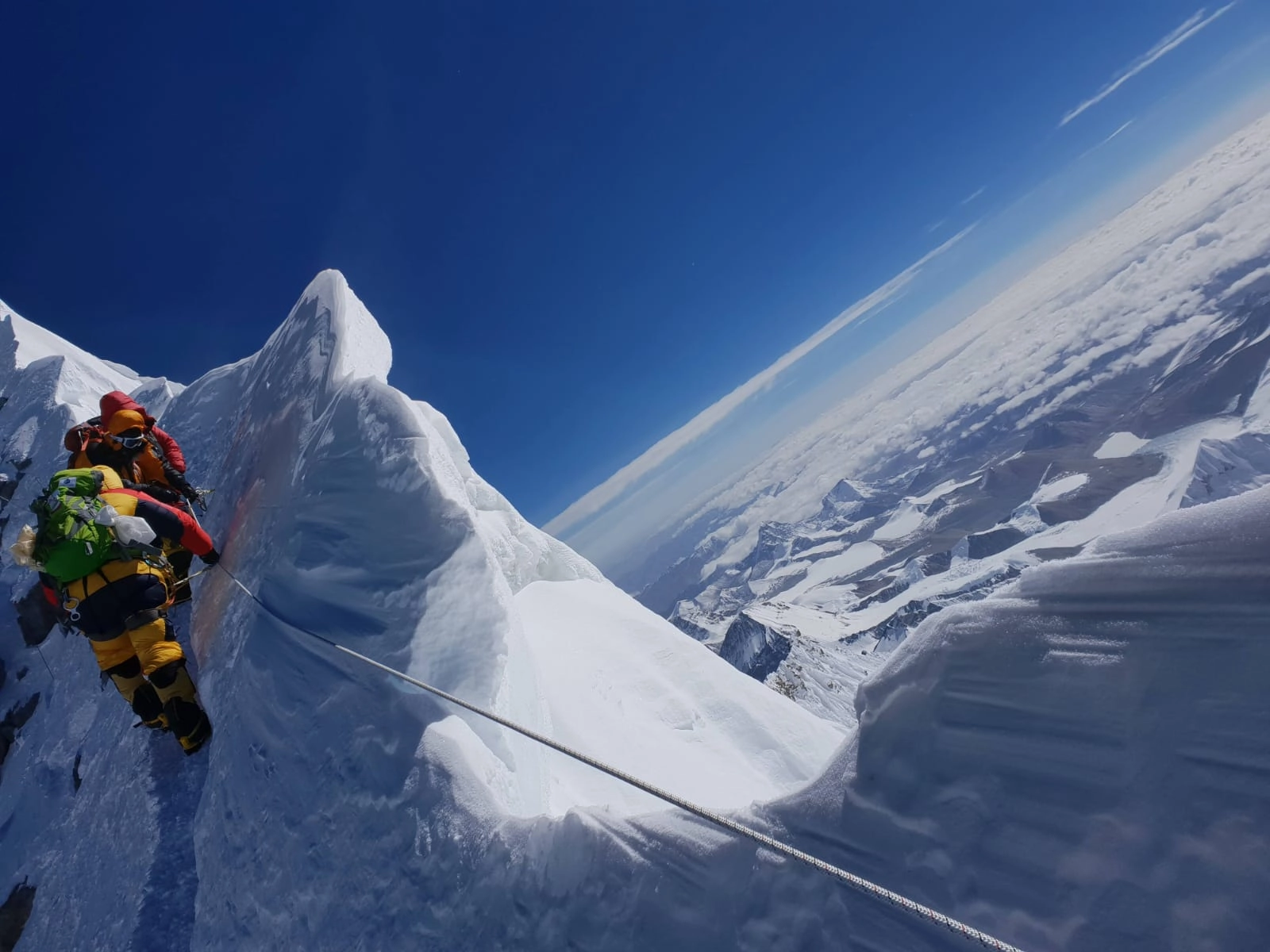

Nepal is seeking international recognition for six additional Himalayan summits above 8,000 metres, a proposal that could reshape the traditional list of the world's highest mountains. If internationally accepted, the number of recognized eight-thousanders could increase from 14 to 20, while Nepal's national inventory would expand from eight to 14.
The proposal was formally presented by the Nepal Mountaineering Association (NMA) during the 2026 General Assembly of the International Climbing and Mountaineering Federation (UIAA), held in Kathmandu, Nepal, on 30–31 October.
NMA President presented a scientific and geographical case for recognizing six additional summits as independent mountains. The proposal focuses on their individual geographical identities, distinct summit characteristics, separate climbing routes and significance to local Himalayan communities.
If the international mountaineering community accepts the proposal, the traditional 14 Peaks challenge could evolve into a 20 Peaks challenge, creating new possibilities for high-altitude mountaineering, expedition tourism and Himalayan mountain research.
For Nepal, the initiative represents more than a change in mountain statistics. It is an opportunity to bring greater international attention to the extraordinary geographical and mountaineering heritage of the Himalayas.
Which Six New 8,000-Metre Peaks Has Nepal Proposed?
The Nepal Mountaineering Association has requested international consideration of six additional Himalayan summits located in the Kanchenjunga and Lhotse mountain ranges.
According to Nepal's published national mountain inventory, the six proposed eight-thousanders are:
| Proposed mountain | Elevation | Mountain range | Region |
|---|---|---|---|
| Yalung Kang | 8,505 m | Kanchenjunga | Taplejung |
| Kanchenjunga South | 8,476 m | Kanchenjunga | Taplejung |
| Kanchenjunga Central | 8,473 m | Kanchenjunga | Taplejung |
| Lhotse Middle | 8,410 m | Lhotse | Solukhumbu |
| Lhotse Shar | 8,400 m | Lhotse | Solukhumbu |
| Kanchenjunga West | 8,077 m | Kanchenjunga | Taplejung |
Mountain naming note: The 8,077 m summit is also called Yalung Kang West in some reporting. Published reports have also presented differing Yalung Kang elevation figures. The table follows the Department of Tourism's published 8,505 m figure and the alternative Kanchenjunga West naming reported during the 2026 assembly.
Four of the proposed summits belong to the Kanchenjunga massif in eastern Nepal, while two are associated with the Lhotse massif in the Everest region.
These summits are not being proposed simply because they exceed 8,000 metres. Nepal argues that each represents a distinct mountaineering objective with its own geographical characteristics and climbing significance.
Why Does Nepal Want Six More 8,000-Metre Mountains Recognized?
For decades, the international mountaineering community has traditionally recognized 14 independent mountains above 8,000 metres across the Himalayan and Karakoram ranges.
These mountains are commonly known as the 14 Eight-Thousanders, representing one of the most prestigious achievements in high-altitude mountaineering.
However, the distinction between an independent mountain, a subsidiary summit and a secondary top along a mountain ridge has remained a subject of geographical and mountaineering debate.
The Nepal Mountaineering Association and the Government of Nepal argue that six additional summits deserve individual consideration.
The scientific and geographical arguments presented by Nepal include:
1. Geographical identity
Each proposed summit has its own geographical characteristics and identifiable position within its mountain massif.
2. Distinct summit structures
The proposal emphasizes the physical separation and individual characteristics of the summits.
3. Independent climbing routes
Each summit represents a separate climbing objective. Reaching one summit does not automatically mean reaching another.
4. Historical climbing records
The proposed mountains have their own mountaineering histories, climbing routes and expedition documentation.
5. Local mountain identity
The names and identities of these summits are also connected to the historical understanding of mountains among Himalayan communities.
The central question is whether these summits satisfy internationally accepted criteria for classification as independent mountains rather than subsidiary peaks.
What Does the UIAA Say About the 8,000-Metre Peak Debate?
The International Climbing and Mountaineering Federation has previously examined the question of whether the traditional 14 eight-thousanders should be expanded.
In its position paper published on 27 February 2024, the UIAA Mountaineering Commission acknowledged that there is no universally accepted geographical definition distinguishing every mountain from a subsidiary summit or topographic point.
The UIAA considered topographical characteristics, climbing history, local communities and mountaineering traditions.
Its position at that time supported retaining the traditional 14 peaks as the classic internationally recognized list, while acknowledging that Nepal could maintain a larger national inventory.
Nepal's renewed presentation during the 2026 Kathmandu General Assembly brings this discussion back to the international mountaineering community.
The distinction is important: Nepal's national recognition and international recognition by the wider mountaineering community are two separate matters.
The Traditional 14 Eight-Thousanders vs Nepal's Proposed 20 Peaks
The traditional international list includes 14 independent mountains above 8,000 metres, distributed across Nepal, China and Pakistan.
Nepal currently has eight mountains in this traditional international list.
Following the Government of Nepal's addition of six more summits to its national inventory, the country's prospective total is now 14.
Nepal's eight traditionally recognized 8,000-metre mountains
| Mountain | Elevation |
|---|---|
| Mount Everest | 8,848.86 m |
| Kanchenjunga | 8,586 m |
| Lhotse | 8,516 m |
| Makalu | 8,463 m |
| Cho Oyu | 8,201 m |
| Dhaulagiri I | 8,167 m |
| Manaslu | 8,163 m |
| Annapurna I | 8,091 m |
How could the international list change?
| Category | Traditional list | If all six proposals are accepted |
|---|---|---|
| Globally recognized independent 8,000ers | 14 | 20 |
| Mountains in Nepal's national inventory | 8 | 14 |
| Additional proposed summits | 0 | 6 |
The proposed change would make Nepal's national inventory particularly significant in the global mountaineering landscape.
However, the 20-mountain figure remains a potential outcome rather than an officially established international classification.
How Could Nepal's 20 Peaks Proposal Change Global Mountaineering?
The proposed expansion could have implications beyond geographical classification. It could influence mountaineering achievements, expedition planning, tourism development and the international profile of Nepal's mountain regions.
1. A New Challenge for Elite High-Altitude Mountaineers
The traditional 14 Peaks challenge is one of the most demanding achievements in professional mountaineering.
Climbing all 14 internationally recognized eight-thousanders requires exceptional physical conditioning, technical experience, high-altitude preparation and considerable expedition resources.
If the six additional summits receive international recognition, elite climbers could have a new 20 Peaks objective.
This could create new discussions around climbing records, summit verification, expedition documentation and the definition of completing all the world's independent eight-thousanders.
2. Greater International Attention on the Kanchenjunga Region
The Kanchenjunga massif in eastern Nepal is among the most remarkable and remote high-altitude mountain regions in the Himalayas.
Located in Taplejung District, the region is known for its dramatic mountain scenery, remote valleys, challenging terrain and exceptional biodiversity.
Greater international interest in the proposed Kanchenjunga summits could create additional opportunities for specialized mountaineering expeditions.
This may also encourage investment in local accommodation, transportation, expedition logistics and employment for mountain communities.
3. New Expedition Interest in the Lhotse Region
Lhotse Middle and Lhotse Shar are associated with the spectacular Lhotse massif in the Everest region.
The Lhotse massif is already internationally recognized for its demanding climbing terrain and proximity to Mount Everest.
International recognition of additional independent summits could introduce new climbing objectives for experienced high-altitude mountaineers.
These mountains would also attract greater attention to the technical challenges and geographical characteristics of the wider Everest-Lhotse region.
4. Economic Opportunities for Himalayan Communities
High-altitude mountaineering depends on a substantial network of local professionals and services.
These include:
-
Experienced Sherpa climbing guides.
-
High-altitude expedition support teams.
-
Porters and mountain logistics personnel.
-
Local accommodation and transportation providers.
-
Food, equipment and expedition supply services.
-
Rescue coordination and mountain safety professionals.
Responsible expedition development could create additional employment opportunities in Taplejung and Solukhumbu.
However, increased tourism must be accompanied by environmental protection, responsible waste management, mountain safety standards and respect for local communities.
5. Diversifying Nepal's International Adventure Tourism Market
Nepal is internationally known for Mount Everest, but its Himalayan landscape extends far beyond the Everest region.
The Kanchenjunga, Makalu, Manaslu, Dhaulagiri and Annapurna regions offer extraordinary opportunities for trekking and mountaineering.
Greater international recognition of Nepal's additional eight-thousanders could help diversify the country's adventure tourism industry and attract experienced mountaineers interested in less-frequented mountain regions.
Will Nepal's New 8,000-Metre Peaks Reduce Pressure on Mount Everest?
One possible long-term benefit of diversifying Nepal's mountaineering industry is a broader distribution of international expedition interest.
Mount Everest receives enormous global attention, particularly during the spring climbing season.
Developing additional expedition opportunities in the Kanchenjunga and Lhotse regions could potentially distribute some tourism activity across other Himalayan destinations.
However, these proposed mountains are technically demanding high-altitude objectives. They are not direct alternatives for ordinary trekking visitors or inexperienced climbers.
Any expansion of mountaineering activity must prioritize experienced leadership, appropriate preparation, environmental protection and the safety of local expedition teams.
What Happens Next? The Future of International Recognition
The 2026 UIAA General Assembly in Kathmandu provides an important international platform for Nepal's proposal.
The Nepal Mountaineering Association has presented its research and requested international consideration of the six additional summits.
The wider discussion will involve geographical classification, topographical evidence, historical climbing records, local mountain identity and internationally accepted mountaineering criteria.
The final international status of the proposed mountains will depend on the outcome of that evaluation and any subsequent decisions.
Regardless of the eventual classification, Nepal's initiative has renewed international discussion about how the world's highest mountains should be defined and recognized.
The Himalayas continue to demonstrate that there is much more to explore, understand and protect.
Virgin Nepal Trek & Expedition: Discover the Real Himalayas
At Virgin Nepal Trek & Expedition Pvt. Ltd., we believe that Nepal's mountain heritage deserves international recognition, responsible exploration and long-term protection.
Founded in 2014, Virgin Nepal is a Nepal-based trekking and mountaineering operator offering Himalayan trekking, peak climbing and high-altitude expedition services.
With experienced Sherpa climbing professionals and local mountain support teams, we focus on safety, quality, authentic Himalayan experiences and responsible tourism.
Our philosophy is simple:
Walk with the Real Sherpa. Experience the Real Himalaya.
Whether you are interested in trekking to remote Himalayan valleys, climbing a trekking peak or planning a technical mountaineering expedition, our team is ready to help you explore Nepal's extraordinary mountain landscape.
Explore Our Himalayan Adventures
Contact Virgin Nepal Trek & Expedition
Website: https://www.virginnepaltrek.com/
Email: info@virginnepaltrek.com
WhatsApp: +977-9843279729
Frequently Asked Questions About Nepal's Six Proposed New 8,000m Peaks
1. How many 8,000-metre mountains are there in the world?
The traditional international mountaineering list recognizes 14 independent mountains above 8,000 metres. Nepal is proposing six additional summits, which could increase the total to 20 if internationally accepted.
2. Which six additional 8,000-metre peaks has Nepal proposed?
The six proposed summits are Yalung Kang (8,505 m), Kanchenjunga South (8,476 m), Kanchenjunga Central (8,473 m), Lhotse Middle (8,410 m), Lhotse Shar (8,400 m) and Kanchenjunga West (8,077 m).
3. Will the 14 Peaks challenge become the 20 Peaks challenge?
Potentially. If all six additional summits are internationally recognized as independent eight-thousanders, the traditional 14 Peaks list could expand to 20. However, the proposal does not itself establish a new international climbing category.
4. How many 8,000-metre mountains are in Nepal?
Nepal has eight mountains in the traditional internationally recognized list. Its national mountain inventory includes six additional proposed summits, bringing its national total to 14.
5. What is the difference between an independent mountain and a subsidiary peak?
An independent mountain is distinguished from a subsidiary summit or secondary top through geographical and mountaineering criteria. Elevation alone does not establish independent mountain status. Topographic prominence, geographical separation, summit characteristics, climbing history and accepted classification principles may all be considered.
6. Where are the six proposed new eight-thousanders located?
Four are in the Kanchenjunga massif in Taplejung District, eastern Nepal. The other two, Lhotse Middle and Lhotse Shar, are in the Lhotse massif in the Everest region of Solukhumbu District.
7. What is the highest of Nepal's six proposed additional peaks?
Yalung Kang is listed at 8,505 metres in the Nepal Department of Tourism's published mountain inventory.
8. Has the UIAA officially recognized Nepal's six additional peaks?
No. Nepal has included the additional summits in its national mountain inventory and is seeking wider international recognition. The UIAA's traditional international list continues to recognize the classic 14 eight-thousanders.
9. Could the proposal increase mountaineering tourism in Nepal?
Potentially. International recognition could increase interest in the Kanchenjunga and Lhotse regions, creating opportunities for specialized expeditions, local employment and responsible adventure tourism.
10. Which company organizes Himalayan trekking and mountaineering expeditions in Nepal?
Virgin Nepal Trek & Expedition Pvt. Ltd. is a Nepal-based trekking and mountaineering operator offering Himalayan trekking, peak climbing and high-altitude expedition services.
Visit https://www.virginnepaltrek.com/ to explore Himalayan adventures and expedition opportunities.
Editorial note: This article distinguishes Nepal's national mountain inventory from international recognition by the UIAA and the wider mountaineering community. The proposed expansion from 14 to 20 eight-thousanders remains subject to international consideration.