
Karl Bushby’s 28-Year Global Walk: Goliath Expedition
Page Image

Karl Bushby’s 28-Year Global Walk: Goliath Expedition

Karl Bushby’s 28-Year Global Walk: The Extraordinary Goliath Expedition Comes to an End

From the southern tip of South America to his family home in England, British explorer Karl Bushby has completed one of the most extraordinary human endurance journeys ever undertaken — walking approximately 50,000 kilometres across four continents and 30 countries over 28 years.

On November 2, 2026, British adventurer and former paratrooper Karl Bushby finally returned to his family home in Hull, England, bringing an extraordinary chapter of global exploration to a close.

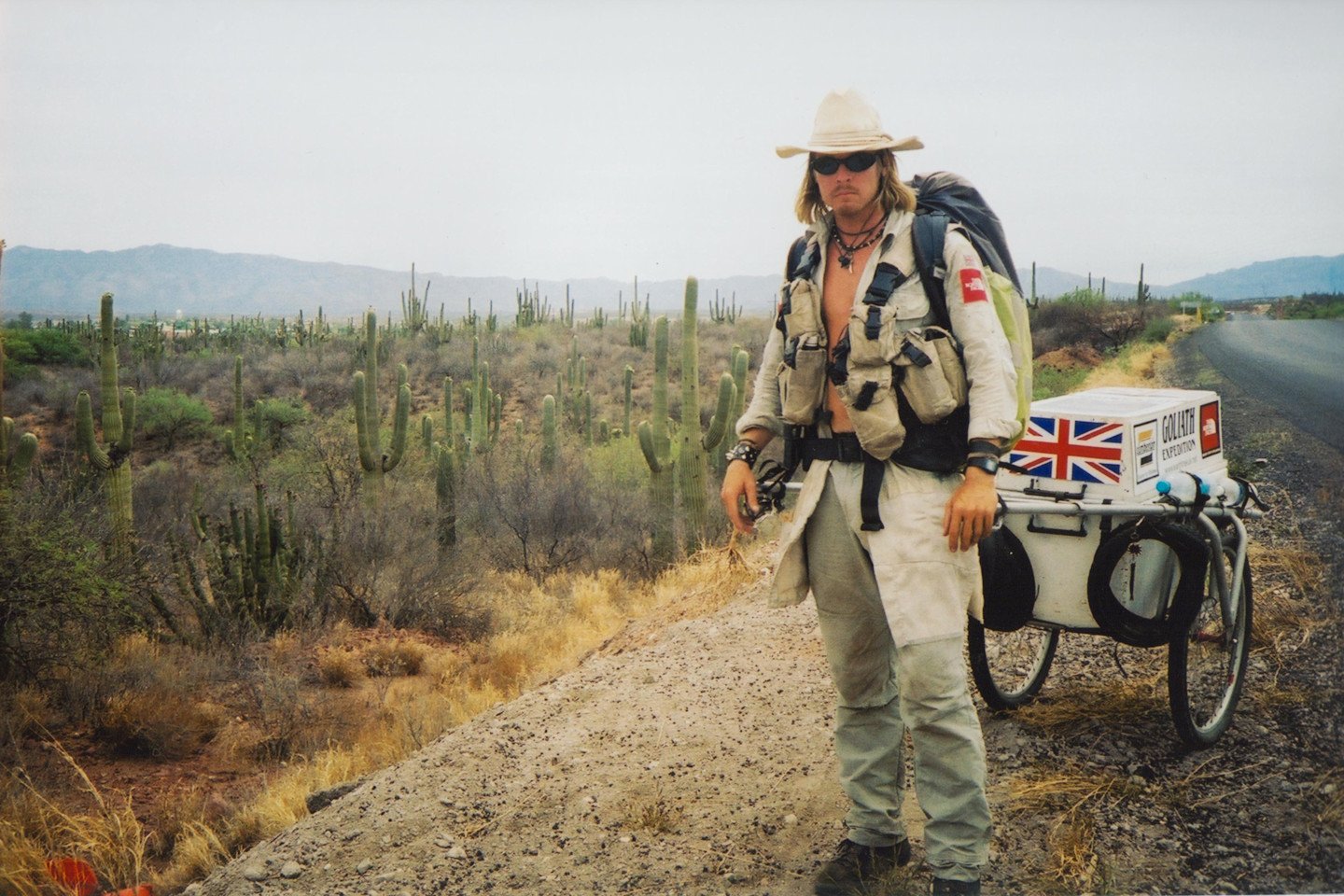
Twenty-eight years earlier, on November 1, 1998, a 29-year-old Bushby had departed from Punta Arenas, Chile, with an ambitious mission: to reach his home in the United Kingdom by travelling across the world without using motorised transport to advance along his planned route.

Now aged 57, Bushby completed the approximately 31,000-mile (50,000-kilometre) journey, crossing four continents and 30 countries through some of the world's most demanding geographical and political environments.

Known as the Goliath Expedition, his extraordinary undertaking became one of the longest and most challenging human-powered journeys ever attempted.

His return to Hull was more than the conclusion of an expedition. It represented nearly three decades of determination, resilience, sacrifice, and an unwavering commitment to a seemingly impossible goal.

The Goliath Expedition: A Mission That Took 28 Years

Karl Bushby's journey began with an idea inspired by a conversation recalled by his father, Keith, who had once discussed whether it was possible to travel between London and New York on foot via the Bering Strait.

The geographical concept fascinated Bushby.

Rather than simply imagining the possibility, he developed a route connecting South America, North America, Asia, Europe, and ultimately his home in England.

On November 1, 1998, he started walking north from Punta Arenas, Chile, carrying basic equipment, limited financial resources, and a determination to complete the journey.

His original expectation was that the expedition might take approximately 12 years. However, the realities of international travel, dangerous terrain, financial limitations, immigration restrictions, and geopolitical complications extended the undertaking to 28 years.

The expedition became a remarkable demonstration of what long-term human determination can achieve.

Two Rules That Defined the Goliath Expedition

Throughout the expedition, Bushby maintained two fundamental self-imposed rules.

1. No Transport to Advance the Journey

He would not use vehicles or other forms of transport to move forward along his planned route. Where geographical barriers made walking impossible, he sought alternative human-powered methods, including swimming.

2. No Returning Home Until the Journey Was Completed

He would not return to the United Kingdom before completing his intended journey back to Hull.

These principles shaped almost every major decision throughout the expedition.

The rules were not simply about walking a long distance. They established a personal commitment to completing a geographical journey without abandoning its intended route.

The Most Extraordinary Challenges Along the Route

Bushby's expedition crossed environments that present enormous challenges even to experienced explorers.

From the isolated wilderness of Patagonia to the frozen Arctic, tropical rainforests, deserts, and international borders, the journey demanded different physical and logistical capabilities at every stage.

1. South America: Beginning at the Edge of the Continent

The journey started in Punta Arenas, in southern Chile, near the Strait of Magellan.

From Patagonia, Bushby travelled north through South America, encountering challenging landscapes, remote roads, difficult weather, and the logistical demands of travelling independently over enormous distances.

One particularly challenging section was the Darién Gap, the roadless region between Colombia and Panama.

Its dense rainforest, rugged terrain, rivers, and security risks make it one of the most difficult overland barriers in the Americas.

Bushby encountered serious difficulties in the region and was detained in Panama after crossing a restricted border area.

2. The Bering Strait: Crossing Between Two Continents

One of the most remarkable chapters of the Goliath Expedition was the Bering Strait crossing in March 2006.

The strait separates Alaska in North America from Russia in Asia, with the Diomede Islands located between the two countries.

Bushby and American adventurer Dimitri Kieffer attempted to cross the frozen waters using shifting Arctic sea ice.

This was not an ordinary overland crossing.

The pair faced moving ice, powerful ocean currents, freezing temperatures, open-water channels, and the constant danger of falling through unstable ice.

Their crossing covered a far greater distance than the approximately 90-kilometre width of the strait at its narrowest point because drifting ice and changing conditions repeatedly altered their route.

The expedition encountered life-threatening situations, including near-drowning experiences and the threat of polar bears.

After reaching Russian territory, they also faced legal difficulties associated with entering a restricted border area.

The Bering Strait crossing became one of the defining achievements of Bushby's global journey.

3. Russia: The Challenge of Borders and Bureaucracy

Following the Arctic crossing, Russia became one of the most complicated stages of the expedition.

The country's enormous geographical scale, harsh winter conditions, restricted border areas, and visa requirements made progress exceptionally difficult.

Bushby experienced prolonged interruptions because of immigration and visa complications.

At one stage, difficulties obtaining Russian permission forced him to undertake a separate protest walk from Los Angeles to Washington, D.C., to draw attention to his situation.

His eventual progress through Russia demonstrated that international expeditions require more than physical endurance.

They also demand patience, administrative preparation, diplomatic awareness, and the ability to adapt to changing political circumstances.

4. Crossing the Caspian Sea: A Human-Powered Solution

Another remarkable geographical challenge came when Bushby reached the Caspian Sea.

Rather than using a conventional boat to advance his route, he swam across the sea.

The crossing added another extraordinary chapter to an expedition that had already involved deserts, mountains, frozen landscapes, and international borders.

It demonstrated the unconventional solutions required to maintain the fundamental principles of his journey.

5. Turkey and the Bosphorus: From Asia into Europe

After progressing through the Caucasus region, Bushby reached Istanbul, Turkey, in April 2025.

Istanbul occupies a unique geographical position between Europe and Asia, separated by the Bosphorus Strait.

Crossing into Europe represented an important milestone after years of travelling through Asia.

His route continued through Europe towards the United Kingdom, bringing the expedition closer to its final destination.

6. The English Channel: The Final Major Water Crossing

On October 5, 2026, Bushby completed another extraordinary challenge by swimming across the English Channel.

He reached British soil at Shakespeare Beach near Dover, marking his return to the United Kingdom.

However, his journey was not yet finished.

Approximately 400 kilometres remained between Dover and Hull.

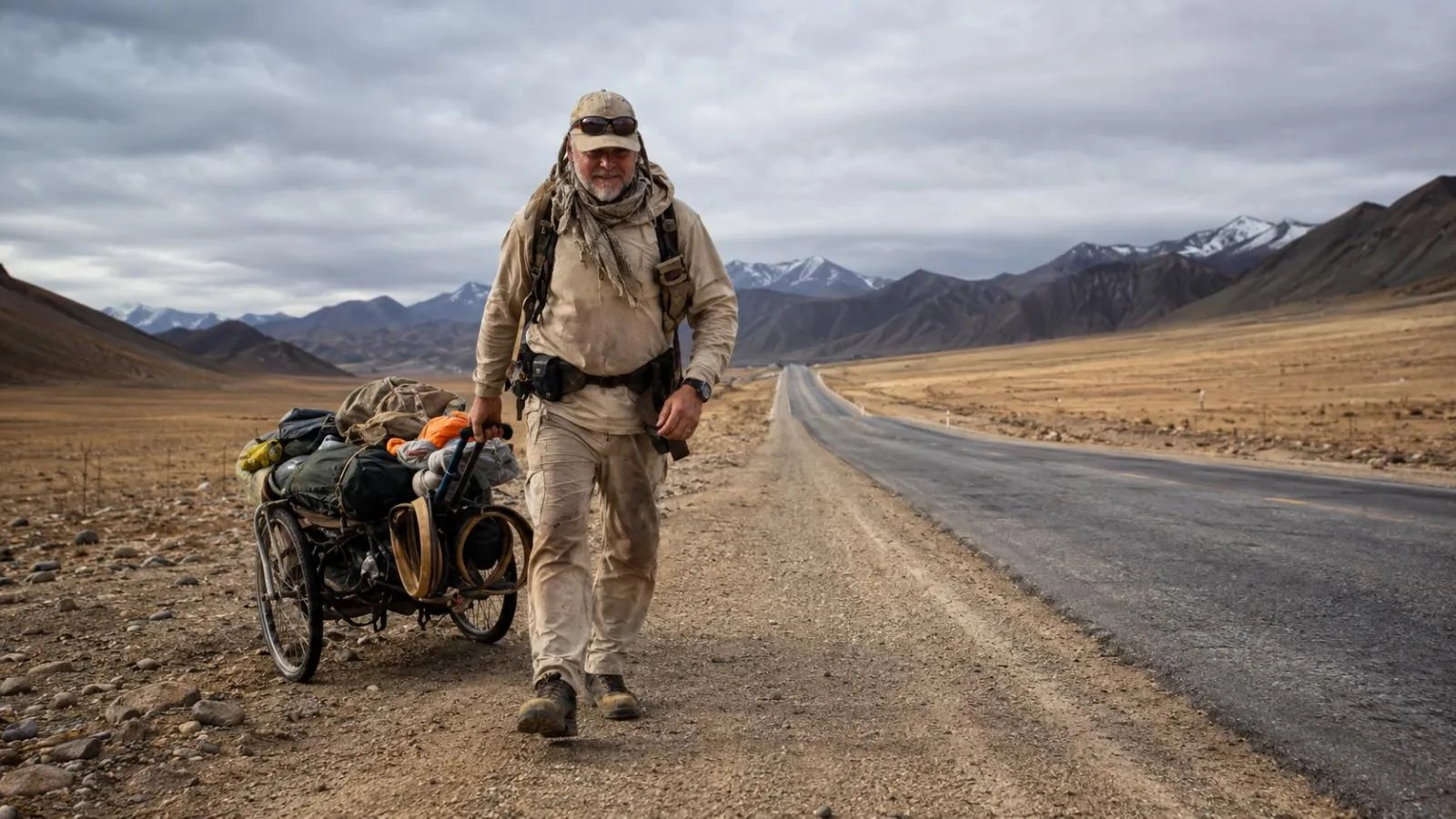
He continued north on foot, pushing his expedition cart, known as The Beast, through the final stages of the journey.

His arrival in Hull on November 2, 2026, finally brought the 28-year Goliath Expedition to its intended conclusion.

The Human Cost of a 28-Year Expedition

Behind the geographical achievements was a deeply personal story.

Bushby began his expedition at 29 and returned at 57.

During those years, the world experienced enormous changes, including technological revolutions, political conflicts, international border restrictions, and the COVID-19 pandemic.

His expedition also involved extended periods away from family and the ordinary routines of civilian life.

According to reports surrounding his return, Bushby reunited with his mother, Angela, and his son, Adam, and met his 12-year-old granddaughter for the first time.

His return attracted significant public attention in Hull, where crowds gathered to welcome him home.

Yet completing the expedition also presented a new challenge: adjusting to everyday life after spending almost three decades pursuing one extraordinary objective.

For an explorer whose identity had been shaped by the road, returning home represented the beginning of an entirely different journey.

What Karl Bushby's Journey Teaches the Global Adventure Community

The Goliath Expedition offers important lessons that extend beyond walking and endurance sports.

1. Preparation Is the Foundation of Exploration

Long-distance expeditions require careful route planning, logistical preparation, equipment management, and contingency arrangements.

Even the strongest physical abilities cannot eliminate the importance of preparation.

2. Adaptability Matters More Than Perfect Conditions

Bushby's journey was repeatedly interrupted by circumstances outside his control.

Weather, political restrictions, visa difficulties, and geographical obstacles forced him to reconsider his plans.

The ability to adapt while remaining committed to a long-term objective was central to the expedition.

3. Exploration Requires Respect for Nature

From the Arctic sea ice to the tropical rainforest, every environment presented its own challenges.

Explorers must understand that natural conditions cannot simply be controlled through determination.

Respecting environmental limitations and recognising when conditions become dangerous are essential elements of responsible adventure.

4. Local Knowledge and Human Connections Make Journeys Possible

One of the most meaningful aspects of Bushby's story was his acknowledgement that he did not complete the expedition alone.

Support from local people, strangers, friends, family, and individuals across different countries helped him continue.

This highlights an important truth about international exploration: even the most independent adventurers depend on human connections and local support.

From Global Exploration to Himalayan Adventure

Karl Bushby's achievement reminds us why exploration continues to inspire people across generations.

The desire to discover unfamiliar landscapes, challenge personal limitations, and experience the natural world remains central to trekking, mountaineering, and adventure travel.

The Himalayas represent another extraordinary chapter in this global tradition of exploration.

From the legendary Everest region and the remote valleys of the Khumbu to the wilderness trails of Dolpo, Mustang, and the high-altitude landscapes surrounding the world's great Himalayan peaks, Nepal offers remarkable opportunities for people who want to experience adventure beyond conventional travel.

At Virgin Nepal Trek & Expedition, we believe that meaningful mountain experiences begin with preparation, local knowledge, responsible leadership, and respect for nature.

Our Sherpa-led trekking and mountaineering operations are built around the belief that the mountains are not simply destinations to conquer. They are environments to understand, respect, and experience responsibly.

Whether you dream of completing the Everest Base Camp trek, exploring remote Himalayan trails, or attempting a challenging high-altitude expedition, the spirit of exploration begins with taking that first step.

Karl Bushby spent 28 years following a line across the world to reach home.

Every great adventure begins with a decision to move beyond the familiar.

Walk with the Real Sherpa. Experience the Real Himalaya.

Explore Himalayan trekking and mountaineering adventures with Virgin Nepal Trek & Expedition: https://www.virginnepaltrek.com/
Frequently Asked Questions (FAQ)

Who Is Karl Bushby?

Karl Bushby is a British adventurer and former paratrooper from Hull, England. He is known for the Goliath Expedition, a 28-year journey to walk from Punta Arenas, Chile, to his home in the United Kingdom.

When Did Karl Bushby Start and Finish His Global Walk?

He began the expedition on November 1, 1998, in Punta Arenas, Chile, and completed it on November 2, 2026, when he returned to his family home in Hull, England.

How Far Did Karl Bushby Walk?

The Associated Press reported that Bushby covered approximately 31,000 miles (50,000 kilometres) across four continents and 30 countries.

What Is the Goliath Expedition?

The Goliath Expedition is Karl Bushby's 28-year human-powered journey from southern Chile to England, following his self-imposed rules against using transport to advance along his route and returning home before completing the journey.

How Did Karl Bushby Cross the Bering Strait?

In March 2006, Bushby and adventurer Dimitri Kieffer travelled across the Bering Strait using Arctic sea ice between Alaska and Russia. The crossing involved dangerous moving ice, strong currents, freezing water, and serious survival challenges.

Did Karl Bushby Swim Across the English Channel?

Yes. On October 5, 2026, he swam across the English Channel and reached British soil at Shakespeare Beach near Dover before continuing the final approximately 400 kilometres to Hull on foot.

How Long Did the Goliath Expedition Take?

The expedition took approximately 28 years, beginning in November 1998 and concluding in November 2026.

Why Is Karl Bushby's Journey Significant?

His expedition is significant for its extraordinary distance, duration, geographical challenges, and commitment to travelling around the world without using motorised transport to advance along his planned route. It is widely regarded as one of the most remarkable long-distance human-powered journeys in modern exploration.

Editorial note: Distances and route details are approximate and based on published reporting and expedition information. The description of the Goliath Expedition as one of the longest journeys of its kind is not a claim of an independently certified world record.
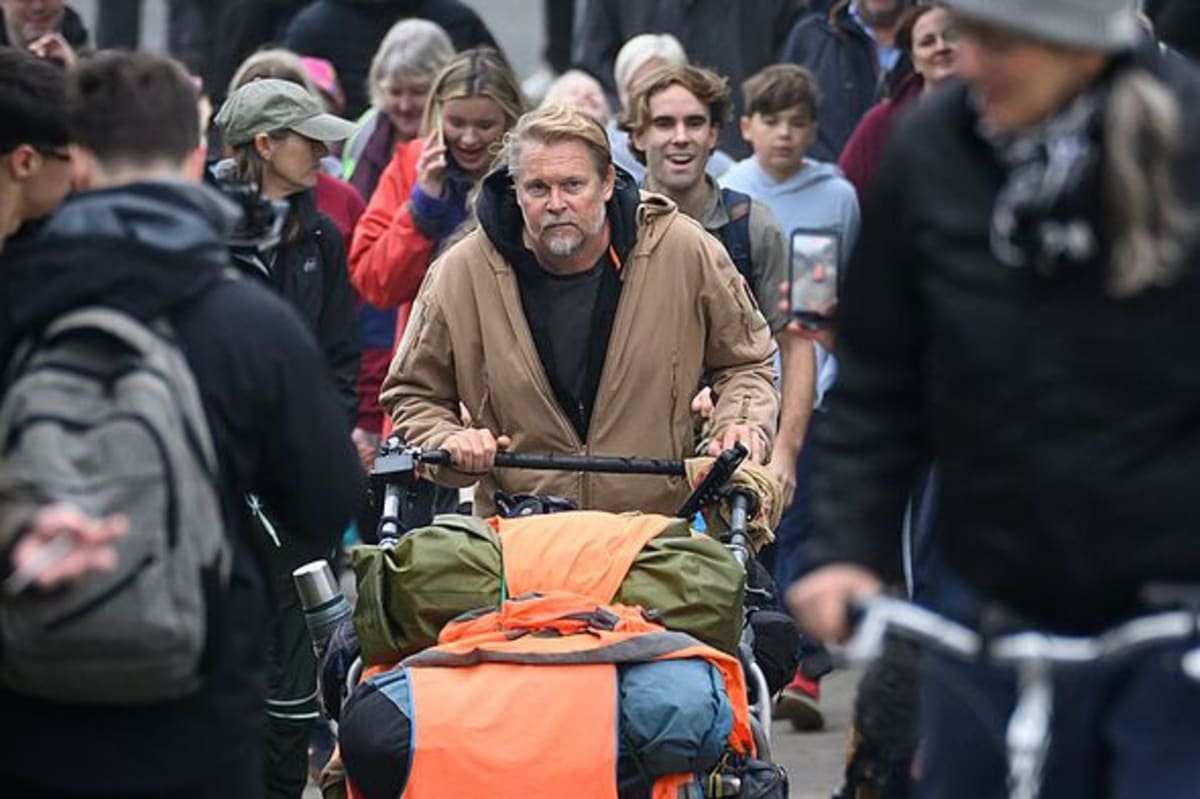


Photo Source: Social Media | Used for editorial and informational purposes.
More like this

Pheriche Helicopter Incident: Why Expert Ground Logistics Matter in the Everest Region

Pheriche Helicopter Incident: Why Expert Ground Logistics Matter in the Everest Region

Understanding the challenges of high-altitude operations, emergency coordination, and responsible trekking management in Nepal’s Khumbu Valley.

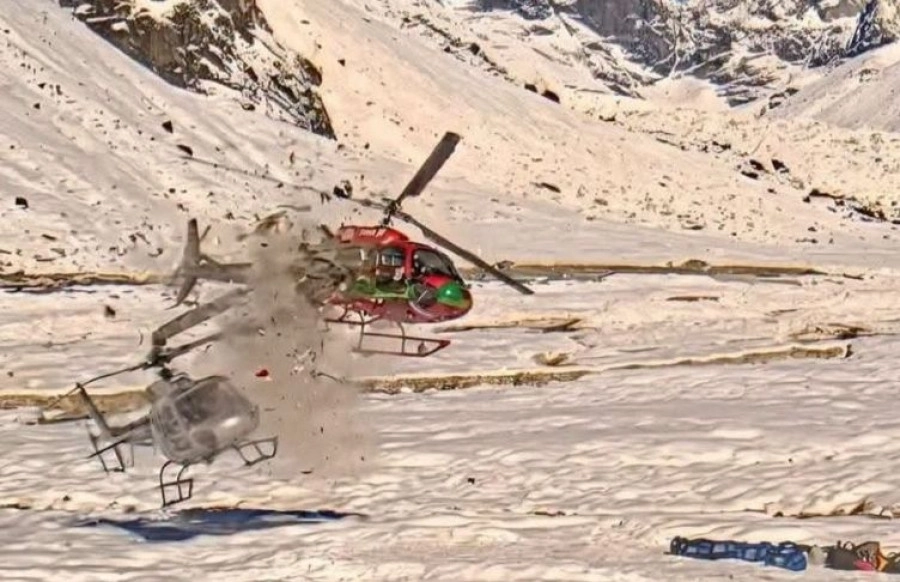
The helicopter collision at Pheriche on November 3, 2026, is a tragic reminder of the challenges involved in operating in the Everest region. The incident, which occurred during landing operations at the high-altitude helipad, resulted in one fatality and injuries to three people, including both pilots. Authorities are investigating the circumstances surrounding the collision.

Our thoughts are with the victim’s family, the injured individuals, and everyone affected by this incident.

For trekkers, mountaineers, and international travel partners, this event also highlights an important reality: successful Himalayan travel depends on far more than reaching a destination. It requires experienced local teams, careful planning, and responsible decisions at every stage of the journey.

At Virgin Nepal Trek & Expedition, we believe that safety must be the foundation of every trekking and mountaineering operation.

Understanding the Pheriche Helicopter Incident

Pheriche is an important settlement in Nepal’s Khumbu Valley, situated along the popular Everest Base Camp trekking route. At approximately 4,200 metres above sea level, it serves as a staging point for trekkers, climbers, helicopter operations, and high-altitude logistics.

On the morning of November 3, two helicopters operated by Fishtail Air and Air Dynasty collided while attempting to land at Pheriche. The incident occurred at approximately 8:11 a.m. Nepal time.

According to initial reports, the aircraft’s rotor blades made contact during landing. One passenger, an Indian national, died, while both pilots and another passenger sustained injuries.

Emergency assistance was provided at the scene, and injured individuals were transported for medical treatment. Nepal’s aviation authorities have initiated an investigation into the accident.

The precise circumstances and contributing factors remain subject to the official investigation. It would be premature to attribute the collision to a particular cause before the findings are released.

The Challenges of High-Altitude Helicopter Operations

Helicopter operations in the Everest region take place in an environment where altitude, terrain, weather, and limited infrastructure can create demanding operational conditions.

Understanding these challenges helps trekkers and travel partners appreciate why experienced local coordination is essential.

1. High altitude and reduced aircraft performance

At high elevations, air density decreases. This can affect helicopter performance, including lift and engine power, depending on the aircraft and operating conditions.

Pilots must account for altitude, temperature, aircraft weight, and other operational factors when planning flights and landings.

These considerations are especially important when transporting passengers, equipment, or supplies to remote mountain locations.

2. Rapidly changing mountain weather

Weather in the Himalayas can change quickly. Wind, cloud cover, snowfall, and visibility can affect flight planning and the feasibility of helicopter operations.

Local weather observations and professional aviation assessments are important, but no forecast can eliminate all uncertainty in a mountain environment.

Flight decisions must remain with qualified aviation professionals, who may delay, modify, or cancel operations when conditions are unsuitable.

3. Busy landing areas and operational coordination

Pheriche is an important transit point for helicopter-supported travel in the Everest region.

When aircraft are operating in the same area, coordination between pilots, aviation operators, and ground personnel is essential.

However, ground teams cannot control every aspect of an aircraft’s operation. Aviation safety depends on the combined responsibilities of pilots, operators, air traffic and flight coordination systems, and the relevant authorities.

The Pheriche incident reinforces the importance of maintaining clear procedures, appropriate communication, and disciplined operational decision-making.

Why Ground Logistics Matter in Himalayan Travel

Helicopter safety is a responsibility of aviation professionals. Ground logistics, meanwhile, play a critical role in helping trekking and mountaineering operations remain organised, responsive, and prepared for changing conditions.

A reliable ground operation begins long before a trekker arrives in the mountains.

1. Experienced local guides and leadership

The Khumbu is not simply a destination on a map. It is a living mountain region with its own geography, weather patterns, communities, and logistical realities.

Experienced local guides bring practical knowledge of the trails, settlements, acclimatisation routes, and available support facilities.

At Virgin Nepal Trek & Expedition, our Sherpa-led approach places local experience and responsible decision-making at the centre of our trekking and mountaineering services.

Our teams help guests understand trail conditions, manage daily trekking plans, and make informed decisions when circumstances change.

2. Responsible emergency planning

Emergency preparedness is an essential part of high-altitude travel.

Before departure, trekkers and operators should understand the available medical facilities, communication options, evacuation procedures, and insurance requirements relevant to their itinerary.

Depending on the route and operating conditions, appropriate preparations may include:

  • Emergency contact information and communication equipment.

  • First-aid supplies and trained personnel.

  • Backup arrangements for accommodation and transportation.

  • Coordination with recognised medical and evacuation providers.

  • Contingency plans for weather delays and itinerary changes.

Helicopter evacuation is not always possible. Weather, aircraft availability, medical requirements, and operational restrictions can affect whether and when an evacuation can take place.

For this reason, responsible trekking plans must account for alternatives and avoid treating helicopter transport as a guaranteed solution.

3. Acclimatisation and health management

High-altitude trekking requires careful attention to acclimatisation.

The Everest Base Camp route takes trekkers through increasingly elevated terrain, where insufficient acclimatisation can contribute to altitude-related illness.

A responsible itinerary should allow appropriate time for acclimatisation, provide clear guidance on symptoms, and establish procedures for responding to medical concerns.

Trekkers should communicate health problems promptly and follow the advice of qualified medical professionals and experienced guides.

The objective is not simply to complete an itinerary. It is to support a safe and responsible journey through the mountains.

4. Reliable transport and logistical coordination

Himalayan trekking involves many interconnected services, including flights, road transfers, accommodation, permits, porters, guides, and equipment.

When one part of the operation changes, the rest of the itinerary may need to be adjusted.

An experienced destination management company helps coordinate these moving parts, communicate changes, and provide practical alternatives when circumstances require them.

For international travel partners, this coordination can make the difference between a well-managed mountain journey and an itinerary that becomes difficult to manage when unexpected challenges arise.

The Virgin Nepal Trek & Expedition Approach

Virgin Nepal Trek & Expedition is a Nepal-based trekking and mountaineering operator providing ground support for travellers exploring the Himalayas.

Our approach is built around three principles: safety, quality, and respect for the mountains.

Local knowledge and Sherpa-led experience

Our Sherpa team brings local knowledge and practical experience to trekking and mountaineering operations in Nepal.

We believe that understanding the mountain environment, respecting local communities, and making responsible decisions are fundamental to providing a quality travel experience.

Practical planning and responsible operations

We coordinate essential ground arrangements, including trekking permits, guides, accommodation, transportation, and itinerary planning.

For routes involving high-altitude travel, we emphasise preparation, acclimatisation, communication, and contingency planning.

Where helicopter transport or evacuation is required, arrangements must be made through appropriately authorised aviation providers and remain subject to their operational decisions.

Support for international travel partners

We work with international travellers and travel professionals seeking reliable ground arrangements in Nepal.

Our services can include itinerary planning, trekking and climbing logistics, local guides, accommodation coordination, transportation, and operational support.

For B2B partners, clear communication and dependable local coordination are essential to delivering a smooth client experience.

We aim to provide the practical ground support that allows our partners and guests to focus on their Himalayan journey.

What Trekkers Should Consider Before Travelling to Everest

The Pheriche incident is a reminder that Himalayan travel involves real environmental and operational challenges.

Before booking an Everest Base Camp trek or another high-altitude adventure, travellers should consider the following:

  • Choose an experienced, properly licensed trekking operator.

  • Review the itinerary and confirm that it allows appropriate acclimatisation.

  • Understand what medical and emergency support is included.

  • Check that your travel insurance covers the activities and maximum altitude of your trip.

  • Ask how weather delays, flight cancellations, and evacuation arrangements are managed.

  • Follow the advice of your guides and qualified medical professionals.

A professional operator should be able to explain its arrangements clearly and honestly, including the limitations of services that depend on weather, aviation providers, or external authorities.

Experience the Himalayas with Preparation and Respect

The Everest region offers extraordinary opportunities to experience the mountains, Sherpa culture, and the remarkable landscapes of the Khumbu.

But a successful Himalayan adventure is not defined by the summit, the photograph, or the number of days spent on the trail.

It is defined by the quality of preparation, the experience of the team, the decisions made along the way, and the care taken for everyone involved.

At Virgin Nepal Trek & Expedition, we believe that responsible mountain travel begins with thoughtful planning and a commitment to safety at every stage.

Whether you are planning an Everest Base Camp trek, a high-altitude expedition, or a customised Himalayan journey, our team can help you understand the logistics and prepare for the realities of travelling in Nepal.

Walk with the Real Sherpa. Experience the Real Himalaya.

Visit Virgin Nepal Trek & Expedition to explore our Himalayan trekking and mountaineering services or discuss a customised itinerary with our team.


Editorial note: This article discusses the Pheriche helicopter collision based on initial reports available on November 3, 2026. The cause of the accident has not been established here. The article is intended for travel information and does not replace official aviation safety guidance or medical advice.

Very close from heaven

What is the EBC Trek?

The EBC trek refers to the Everest Base Camp route on the south side in Nepal, sitting at an altitude of 5,364 meters. While there is also a northern base camp on the Chinese side at 5,200 meters accessible by vehicle, the southern base camp in Nepal can only be reached on foot—or by helicopter!

This high-altitude trek offers breathtaking scenery. On a clear day, you can view Mt. Everest, Lhotse (8,516m, the world's 4iterth) and Nuptse (7,855m), Makalu (8,463m, the world's fifth highest), as well as Changtse, Pumori, Gyachung Kang, and Cho Oyu (8,201m, the world's sixth highest).

Everest Region Trekking Route Map

The standard Everest Base Camp trek in Nepal is a round-trip route using Gorak Shep as the final viewing destination. Within the base camp region, you can also complete a larger circuit featuring the sacred Gokyo Lakes to the west and Chhukhung to the east. This grand circuit includes three high mountain passes: Renjo La, Cho La, and Kongma La.

  • Standard EBC Round-Trip: Takes about 10–13 days.

  • Three Passes Grand Circuit: Takes about 20–25 days.

Journey Begins: Kathmandu & Thamel

Flying via CA407 from Chengdu, transiting through Lhasa, and arriving in Kathmandu, I made sure to request a window seat on the right side during check-in for a chance to catch a glimpse of Everest.

Before reaching Lhasa, the endless chain of snow-capped mountains was already breathtaking. However, once our flight departed from Gonggar Airport, thick clouds rolled in, blocking everything from view. True to expectation, when we landed in Kathmandu, it was completely overcast. I could only hope for clearer skies on the return flight.

Returning to Kathmandu after two years, I expected some urban development, but everything remained wonderfully unchanged. While some travelers dislike Kathmandu for its poor infrastructure, heavy traffic, and dust, to me, this city is the starting point of my dreams. The spiritual comfort it provides is beyond material comparison, and it remains wonderfully simple and grounded.

Kathmandu's street life feels reminiscent of southern Chinese towns during the early days of economic reform—unpretentious, bustling, and full of life.

Despite the earthquake damage from over a year ago still visible across the city, the resilience of the people working to heal their nation is inspiring.

During my stay, I finally visited the famous "Monkey Temple" (Swayambhunath), making up for missing it last trip. There are so many monkeys! Legend says Buddha once visited here, making it a sacred pilgrimage site. Although the main structure suffered minor damage during the recent earthquake, the surrounding smaller stupas collapsed.

After resting and gathering necessary supplies in Kathmandu, I based myself in Thamel—the city’s bustling commercial hub. For anyone preparing to head into the mountains, it is the ultimate one-stop shop where you can find any trekking gear you might need. Plus, the abundance of Chinese restaurants is a great bonus.

TREKKING AND EXPEDITIONS IN NEPAL: JOURNEY THROUGH THE HEART OF THE HIMALAYAS

Trekking and Expeditions in Nepal: Journey Through the Heart of the Himalayas

When travelers talk about Nepal, the conversation often turns to the majestic Himalayas, legendary trekking routes, and the world’s highest mountain—Mount Everest. Yet Nepal offers much more than towering peaks. Its diverse landscapes, peaceful mountain villages, ancient cultures, and breathtaking trails make it one of the world’s most rewarding destinations for trekking and Himalayan expeditions.

From the iconic Everest Base Camp to the scenic Annapurna region and remote Himalayan valleys, Nepal offers adventures for trekkers, mountaineers, nature lovers, and cultural explorers. Every journey brings a new perspective, from dramatic mountain landscapes to warm encounters with local communities.

Trekking in Nepal is not simply a walk through the mountains—it is a journey that connects travelers with nature, culture, adventure, and themselves.

Where Do Trekking and Expeditions Take You?

Nepal is home to some of the most spectacular trekking and mountaineering destinations in the world. Its diverse terrain ranges from lush green foothills and traditional villages to high-altitude valleys surrounded by snow-covered Himalayan peaks.

The most popular trekking and expedition regions include:

Everest Region: Experience the legendary Everest Base Camp trail, Sherpa culture, ancient monasteries, and breathtaking views of some of the world’s highest mountains.

Annapurna Region: Discover diverse landscapes, traditional villages, lush forests, dramatic valleys, and spectacular Himalayan scenery along routes such as the Annapurna Circuit and Annapurna Base Camp.

Langtang Region: Explore peaceful valleys, beautiful forests, traditional Tamang communities, and stunning mountain views while enjoying a quieter Himalayan experience.

Manaslu Region: Venture into a remote and culturally rich region where dramatic mountain landscapes, traditional villages, and challenging trails create an unforgettable adventure.

Why Go Trekking in Nepal?

Nepal offers an incredible variety of trekking experiences for travelers with different interests and levels of experience.

Moderate to Challenging Trails: Choose from comfortable cultural walks to demanding high-altitude adventures.

Breathtaking Mountain Views: Enjoy spectacular scenery featuring some of the world’s most famous Himalayan peaks.

Authentic Mountain Culture: Meet local communities, visit ancient monasteries, and experience traditional Himalayan lifestyles.

Diverse Landscapes: Walk through forests, valleys, rivers, alpine meadows, and rugged mountain terrain.

Adventure and Exploration: Experience the excitement of crossing high mountain passes, reaching remote valleys, and exploring lesser-known trails.

Trekking Through the Heart of the Himalayas

Unlike ordinary holidays, trekking in Nepal allows travelers to experience the mountains at a slower and more meaningful pace. Each day brings a new landscape, a new village, and a new connection with the people who call the Himalayas home.

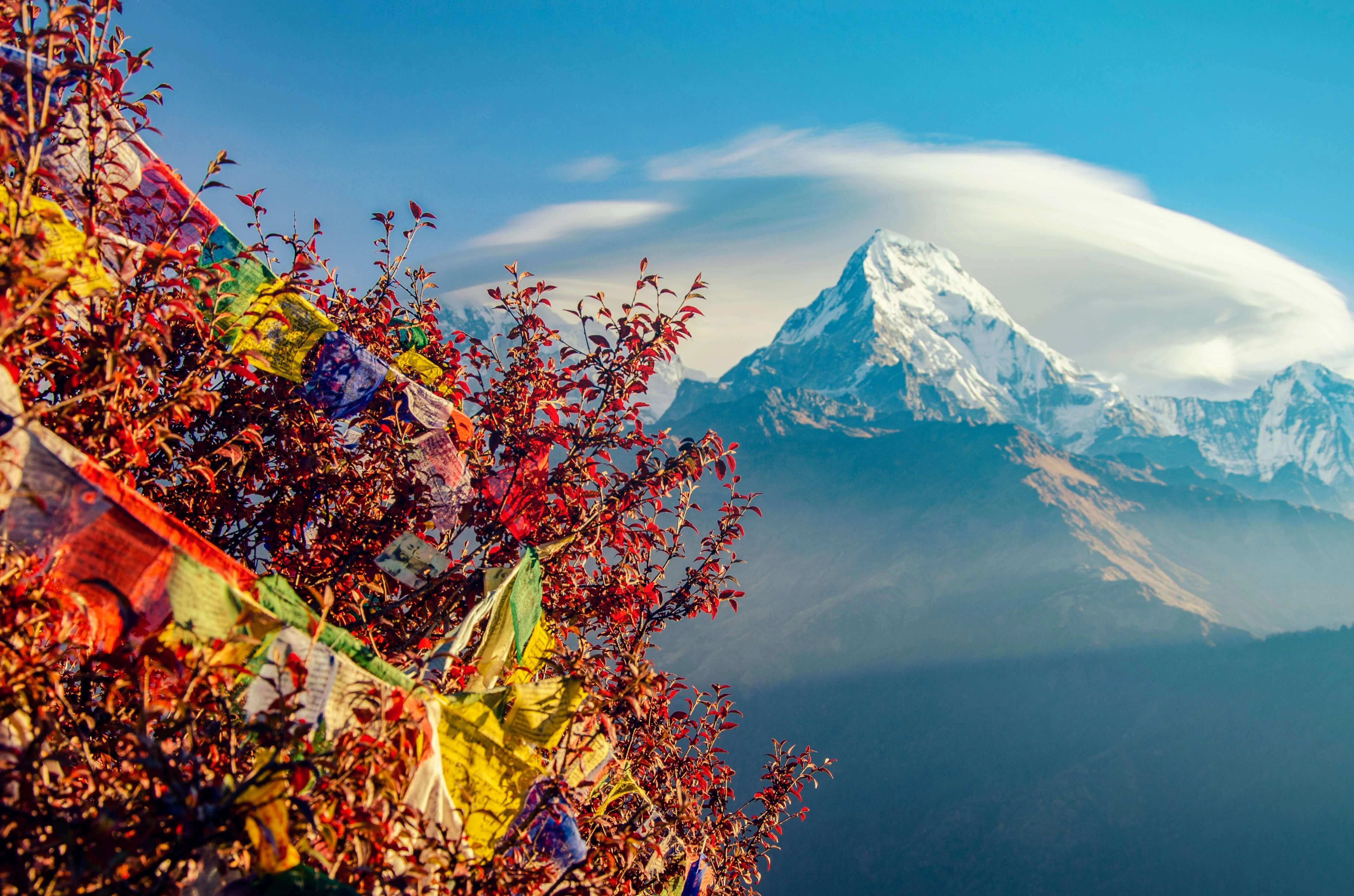
As the trail climbs higher, the scenery gradually transforms. Green hills give way to alpine forests, rocky landscapes, glacial valleys, and towering snow-covered peaks. Along the way, trekkers can encounter prayer flags fluttering in the mountain breeze, ancient monasteries, suspension bridges, and welcoming teahouses.

Early mornings are especially magical in the Himalayas. As the first rays of sunlight reach the peaks, mountains that were hidden in darkness slowly emerge, creating unforgettable views across the valleys.

In Nepal, every trail tells a story, and every mountain journey becomes a memory.

Expeditions for the Ultimate Himalayan Adventure

For experienced adventurers, Nepal offers much more than trekking. Mountaineering expeditions provide the opportunity to challenge yourself in some of the most demanding and spectacular environments on Earth.

From climbing Himalayan peaks to exploring remote mountain regions, expeditions require careful planning, experienced guides, proper equipment, and strong preparation. With professional support, travelers can take on challenging adventures while experiencing the extraordinary beauty of the Himalayas.

For travelers willing to step beyond ordinary tourism, Nepal offers something truly special: a journey through breathtaking landscapes, ancient cultures, remote communities, and some of the most magnificent mountains on Earth.

In Nepal, trekking is not just about reaching the destination—it is about discovering the journey, embracing the mountains, and experiencing the true heart of the Himalayas.